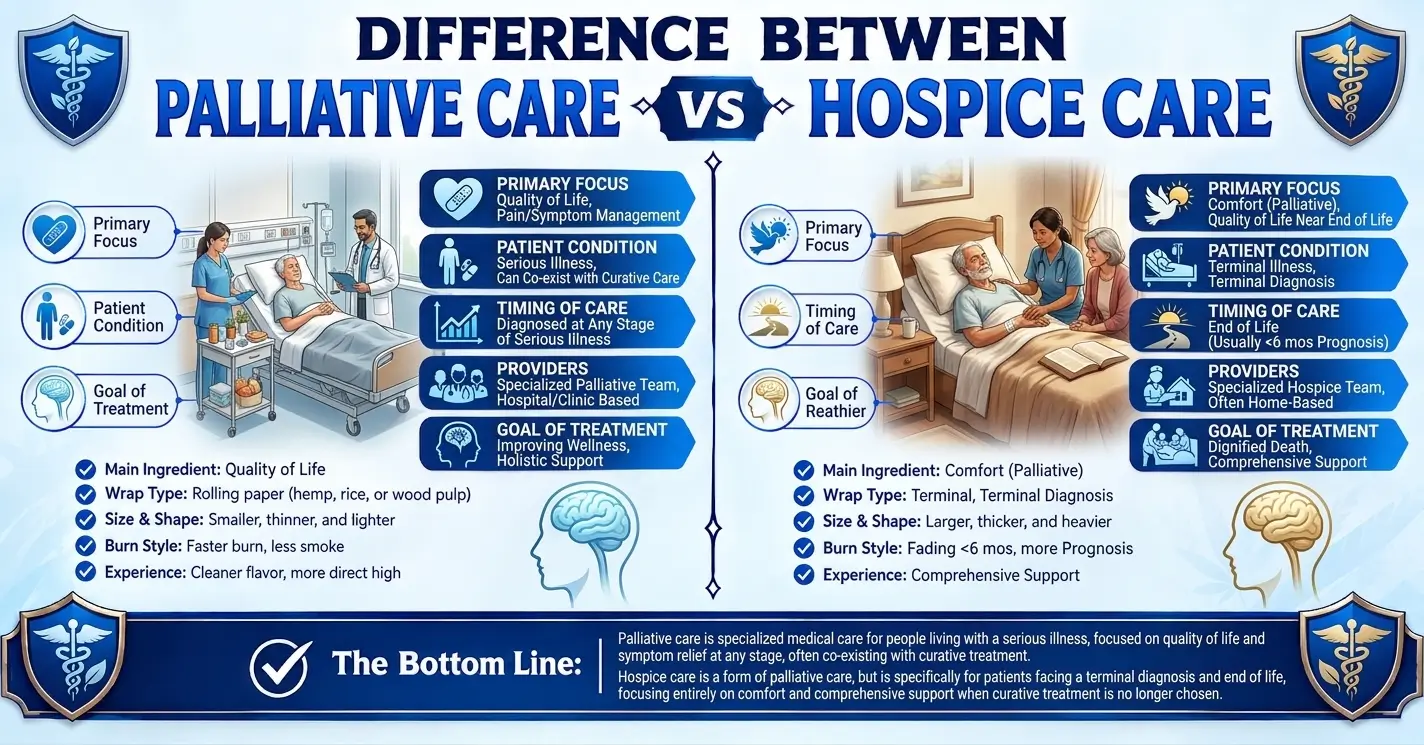

Palliative care and hospice care both help people with serious illness manage symptoms, improve comfort, and maintain quality of life. Because both can involve pain relief, emotional support, family support, and specialized care teams, they are often confused.
The key difference is when and why the care is provided. Palliative care can be used at any stage of a serious illness and may be provided alongside treatment intended to cure or control the illness. Hospice care is specifically focused on comfort and quality of life during the final phase of a life-limiting illness, when treatment goals have shifted away from curing or controlling the underlying disease.
Quick Answer
Palliative care is specialized supportive care for people living with serious illness. It can begin early and can be provided alongside treatments intended to cure, control, or manage the illness.
Hospice care is a form of end-of-life care focused primarily on comfort, symptom management, dignity, and support for the patient and family when the illness is approaching its final phase.
So, the simplest distinction is:
Palliative care can accompany serious-illness treatment; hospice care focuses on comfort when care has entered the end-of-life phase.
The exact eligibility rules for hospice vary by country and health system. In the United States, for example, hospice eligibility commonly involves a physician’s certification that a person is expected to have about six months or less to live if the illness follows its usual course.
Palliative Care vs. Hospice Care at a Glance
| Palliative Care | Hospice Care | |
|---|---|---|
| Main focus | Quality of life, symptom relief, and support during serious illness | Comfort, quality of life, and support near the end of life |
| When it can begin | At any stage of a serious illness | During the final phase of a life-limiting illness |
| Can it accompany disease treatment? | Yes | Usually not treatment intended to cure the underlying terminal illness |
| Main goal | Help the person live as well as possible while managing illness | Maximize comfort and support during the end-of-life phase |
| Care for family/caregivers | Yes | Yes |
| Symptom management | Yes | Yes |
| Is it the same as hospice? | No | No |
| Relationship | A broad approach to serious-illness supportive care | A specialized form of end-of-life care that includes palliative principles |
Palliative and hospice care share many features, but their timing and treatment goals are different.
What Is Palliative Care?
Palliative care is specialized care designed to improve quality of life for people living with serious illness. It addresses more than physical symptoms. Depending on the person’s needs, it can include physical, psychological, social, emotional, and spiritual support.
The World Health Organization describes palliative care as an approach that prevents and relieves suffering and supports both patients and their families. It can be introduced early and used alongside therapies intended to prolong life.
Palliative care may help with problems such as:
- Pain
- Shortness of breath
- Nausea
- Fatigue
- Anxiety
- Sleep problems
- Emotional distress
- Treatment side effects
- Family and caregiver concerns
- Difficult medical decisions
One of the most important points is that receiving palliative care does not automatically mean that curative or disease-directed treatment has stopped. A person may receive palliative care while also receiving chemotherapy, radiation, surgery, dialysis, or other treatment, depending on the illness and treatment plan.
Example
A person with advanced cancer may continue cancer treatment while also seeing a palliative care team to manage pain, nausea, fatigue, anxiety, and other problems affecting daily life.
In this situation, palliative care is an additional layer of support, not necessarily a replacement for the person’s cancer treatment.
What Is Hospice Care?
Hospice care is specialized care for people approaching the end of life. Its central focus is comfort, symptom management, quality of life, dignity, and support for the patient and their family.
It generally becomes appropriate when treatment intended to cure or control the underlying illness is no longer beneficial, is no longer desired, or the goals of care have shifted primarily toward comfort.
Hospice services may include:
- Pain and symptom management
- Nursing care
- Emotional support
- Social support
- Spiritual support
- Help for family caregivers
- Assistance with personal care
- Guidance about what to expect near the end of life
- Support with medications and equipment related to comfort
Hospice does not mean that every form of medical care suddenly stops. People may continue receiving medicines and other interventions that manage pain or other symptoms. What changes is the overall goal of care: treatment aimed at curing the underlying illness is generally no longer the central objective.
What Is the Main Difference Between Palliative Care and Hospice?
The biggest difference is the stage of illness and the overall goal of care.
Palliative care
Palliative care can be used throughout a serious illness. The person may still be receiving treatment intended to control or potentially cure the illness.
Hospice care
Hospice is intended for the final phase of a life-limiting illness, when the primary goal has shifted toward comfort and quality of life rather than curing or controlling the underlying disease.
A useful way to remember it is:
Palliative care can be part of the journey throughout serious illness. Hospice is specifically focused on the end-of-life part of that journey.
The National Institute on Aging similarly explains that palliative care can begin after diagnosis and continue alongside treatment, while hospice is used during the final months or weeks of life when comfort becomes the central focus.
When to Use Palliative Care
Palliative care may be appropriate when someone has a serious illness and is experiencing symptoms, stress, treatment side effects, or difficult decisions.
It can be considered:
- Soon after diagnosis
- During active treatment
- When symptoms become difficult to control
- When treatment causes significant side effects
- When a person or family needs help understanding treatment choices
- When caregivers need additional support
- When quality of life is being affected by the illness
Palliative care is not limited to cancer. Serious illnesses such as heart failure, kidney disease, chronic respiratory disease, neurological conditions, dementia, and other life-threatening or life-limiting conditions may also require palliative support.
When Hospice May Be Appropriate
Hospice may be considered when a person is approaching the end of life and treatment aimed at curing or controlling the underlying illness is no longer the primary goal.
The decision depends on the person’s illness, prognosis, goals, wishes, and the healthcare system’s eligibility requirements.
In the United States, hospice eligibility commonly uses a prognosis of approximately six months or less if the disease follows its normal course. This is a U.S. hospice eligibility criterion, not a universal worldwide definition of hospice.
The actual decision should be discussed with the person’s healthcare team and hospice or palliative care professionals.
Can You Receive Palliative Care While Getting Treatment?
Yes.
This is one of the most important differences to understand.
Palliative care can be provided at the same time as treatment for the underlying illness. Its purpose is to help manage symptoms, side effects, emotional difficulties, communication, and other challenges associated with serious illness.
For example:
A patient receiving chemotherapy may also receive palliative care to help manage pain, nausea, fatigue, anxiety, and treatment-related side effects.
Palliative care therefore does not necessarily mean that someone has stopped fighting or treating the illness.
Does Hospice Mean All Treatment Stops?
No.
Hospice changes the focus of care, but it does not mean that every medication, medical intervention, or form of support disappears.
Hospice can provide treatment for symptoms such as pain, nausea, anxiety, and breathlessness. The major distinction is that treatment intended to cure the underlying terminal illness is generally no longer the main goal.
This distinction matters because “no curative treatment” and “no medical care” are not the same thing.
Hospice continues to provide active care — but that care is centered on comfort and quality of life.
Similarities Between Palliative Care and Hospice
Palliative care and hospice have several important similarities.
Both can:
- Relieve pain and other symptoms
- Improve quality of life
- Address emotional and psychological needs
- Support families and caregivers
- Involve multiple healthcare professionals
- Help people communicate their goals and preferences
- Provide comfort-focused support
Both approaches recognize that serious illness affects more than the body. WHO describes palliative care as addressing physical, psychological, social, and spiritual suffering, while NIA emphasizes comfort, care, and quality of life for both patients and families.
Palliative Care and Hospice in Real-Life Examples
Example 1: Serious illness with ongoing treatment
Someone has advanced cancer and is receiving chemotherapy. The treatment causes nausea, pain, and fatigue.
A palliative care team can help manage these symptoms while the person continues cancer treatment.
This is palliative care.
Example 2: Treatment is no longer the main goal
A person has a life-limiting illness that is no longer responding to disease-directed treatment. The person and family decide that comfort and quality of life should become the main priorities.
Hospice may be appropriate, depending on the person’s situation and local eligibility requirements.
Example 3: Heart failure
Someone with severe heart failure experiences breathlessness, fatigue, anxiety, and repeated hospital visits.
Palliative care may help manage symptoms and support the patient and family while other treatment continues.
Palliative care does not require the person to be dying.
Example 4: Final phase of illness
A person with an advanced illness is nearing the end of life and no longer wants treatments aimed at controlling the underlying disease.
The healthcare team focuses on pain control, comfort, dignity, family support, and the person’s wishes.
This is the type of situation hospice is designed to support.
Common Misconceptions About Palliative Care and Hospice
Misconception 1: “Palliative care means someone is dying.”
Not necessarily.
Palliative care can begin early in a serious illness and can be provided alongside treatment.
Misconception 2: “Hospice means doctors stop caring for the patient.”
No.
Hospice provides active medical and supportive care, especially for pain and other symptoms. The main change is the goal of treatment.
Misconception 3: “Palliative care and hospice are exactly the same.”
No.
Hospice is specifically associated with end-of-life care, while palliative care can be provided much earlier and alongside treatment.
Misconception 4: “Hospice means all medications stop.”
No.
Medications and interventions used to control symptoms and improve comfort may continue during hospice.
Can Palliative Care and Hospice Be Used Interchangeably?
No.
The terms overlap because hospice includes many principles and services associated with palliative care. However, they are not interchangeable.
A simple distinction is:
- Palliative care: supportive care that can be provided during serious illness, including alongside treatment.
- Hospice care: specialized end-of-life care focused primarily on comfort and quality of life.
The National Institute on Aging describes hospice as a specific type of palliative care delivered during the final phase of life.
How to Remember the Difference
Think of the distinction this way:
Palliative = support during serious illness
Hospice = comfort-focused care near the end of life
Or remember the question each one addresses:
Palliative care: “How can we help you live as well as possible while dealing with this illness?”
Hospice care: “How can we provide the greatest comfort and support during the final phase of life?”
These are simplified memory rules, not substitutes for an individual medical assessment.
Which One Should I Use?
The right choice depends on the person’s condition, treatment goals, and stage of illness.
Palliative care may be appropriate when someone has a serious illness but still wants treatment aimed at controlling the condition or potentially curing it.
Hospice may be more appropriate when the illness is entering its final phase and the main goal has shifted toward comfort and quality of life.
For difficult-to-manage symptoms at any stage of a serious illness, palliative care can be discussed with the healthcare team.
When doctors believe a person may be approaching the end of life, it is worth asking about hospice eligibility and whether hospice care aligns with the person’s goals.
The right option depends on the illness, treatment options, prognosis, personal preferences, and local healthcare system. A healthcare professional can explain what services are available and appropriate for an individual situation.
Palliative or Hospice? Practice Examples
Choose palliative care or hospice care for each situation.
- A patient with cancer is receiving chemotherapy but has severe nausea and pain.
- A person with a life-limiting illness is approaching the end of life and wants comfort-focused care.
- Someone with advanced heart failure needs additional help managing symptoms while continuing medical treatment.
- A person has stopped pursuing treatment intended to control an advanced terminal illness and wants support focused on comfort.
- A patient has recently been diagnosed with a serious illness and wants help managing symptoms and understanding treatment decisions.
- A person is in the final phase of a terminal illness and needs support for both the patient and family.
Answers
- Palliative care — it can accompany active treatment.
- Hospice care — the situation is focused on end-of-life comfort.
- Palliative care — it can support symptom management alongside treatment.
- Hospice care — the focus has shifted toward comfort during the final phase.
- Palliative care — it can begin early in serious illness.
- Hospice care — the emphasis is end-of-life comfort and family support.
Frequently Asked Questions
What is the difference between palliative care and hospice care?
Palliative care can be provided at any stage of serious illness and may occur alongside disease-directed treatment. Hospice focuses on comfort and quality of life during the final phase of a life-limiting illness.
Is hospice a type of palliative care?
Yes. Hospice uses many principles of palliative care, but it is specifically focused on end-of-life care.
Can you have palliative care and treatment at the same time?
Yes. Palliative care can be provided alongside treatment intended to cure, control, or manage a serious illness.
Does hospice mean treatment stops completely?
No. Hospice can continue medications and other interventions that relieve symptoms and improve comfort. What generally changes is the focus away from curing the underlying terminal illness.
Is palliative care only for cancer?
No. Palliative care may be useful for many serious illnesses, including heart disease, kidney disease, respiratory disease, neurological conditions, dementia, and others.
Does palliative care mean someone has only six months to live?
No. Palliative care does not generally depend on a six-month prognosis. It can begin much earlier in serious illness. The six-month criterion is commonly associated with U.S. hospice eligibility, not palliative care itself.
Where can hospice care be provided?
Depending on the healthcare system and the person’s needs, hospice may be provided at home, in a hospital, nursing facility, or dedicated hospice setting.
Are palliative care and hospice care only for older adults?
No. Palliative care can be provided to people of different ages, including children, when they have serious or life-threatening illness.
Conclusion
The difference between palliative care and hospice care mainly comes down to timing and goals. Palliative care can support someone at any stage of a serious illness and may be provided alongside treatment. Hospice is specifically designed for the final phase of a life-limiting illness, when comfort, quality of life, and support become the central priorities.
The simplest rule is:
Palliative care can accompany serious-illness treatment; hospice focuses on comfort and support near the end of life.
If you or someone you care for is dealing with a serious illness, the healthcare team can explain whether palliative care, hospice care, or another type of support fits the person’s medical situation and goals.

Sajid Ali is an English language educator and content specialist with 7+ years of teaching experience. He holds master’s degrees in Information Technology and Education from the Virtual University of Pakistan and writes SEO-optimized, learner-friendly vocabulary content for diffari.com.