

Difference between truss and rafter often becomes confusing when people plan to build a house or study construction basics. Many homeowners hear these terms from engineers but do not fully understand them.
Imagine talking to a builder about your new roof, and he asks whether you want a truss system or rafters. Both sound technical, and choosing the wrong one can affect cost and design.
The difference between truss and rafter mainly relates to roof structure, support system, and construction method. Both are used to support roofs, but they work in different ways.
Understanding the difference between truss and rafter helps students, builders, engineers, and homeowners make better construction decisions. Let’s explore their key difference simply and practically.
Key Difference Between the Two
The main difference between truss and rafter lies in structure and design.
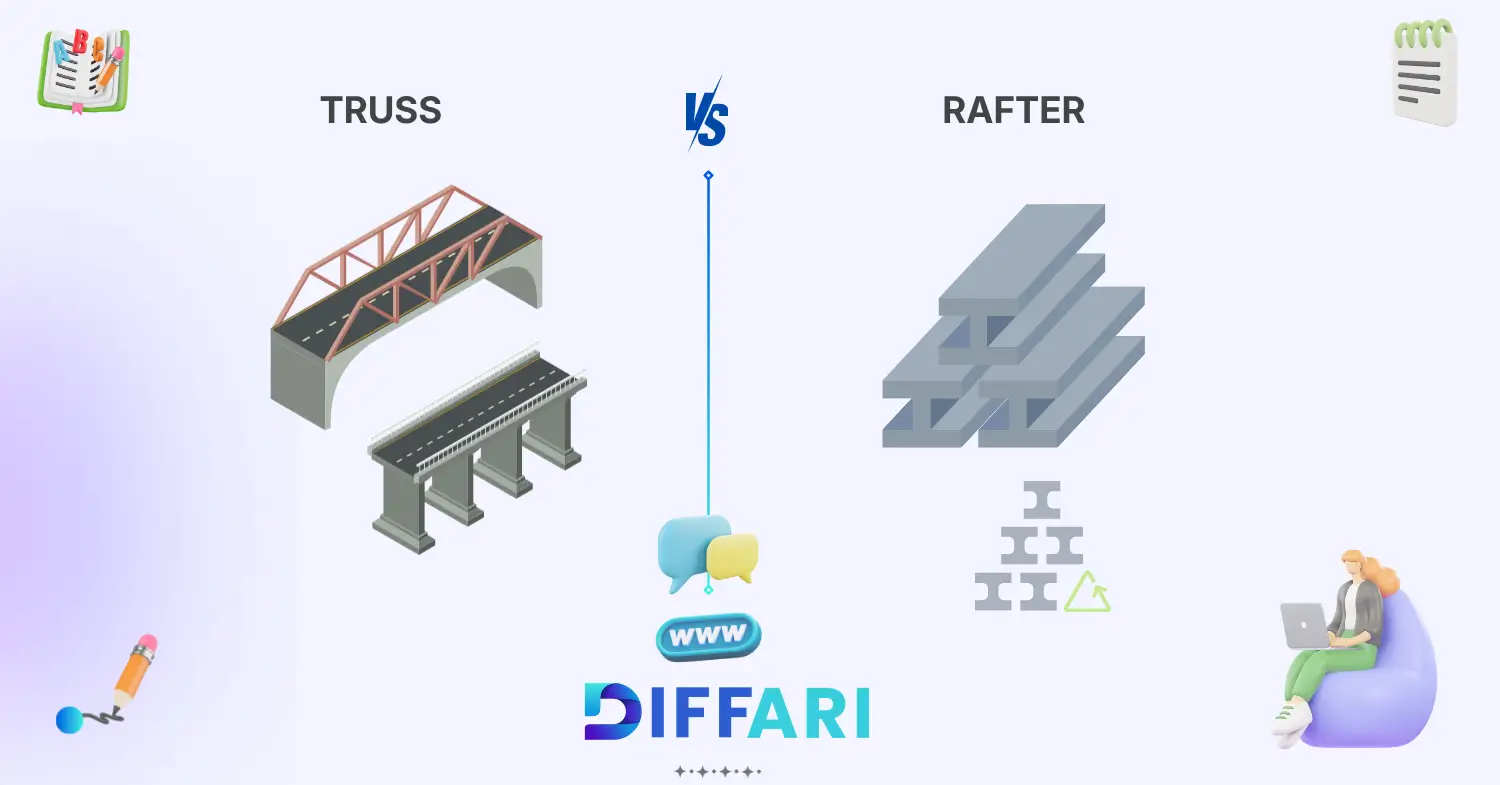
A truss is a pre-built triangular framework made of multiple connected members that support the roof and distribute weight evenly. It is usually manufactured in factories and installed on-site.
A rafter is a single sloped beam that supports the roof and connects the ridge to the wall plate. Builders install rafters individually during roof construction.
In simple terms, truss is a complete engineered roof structure, while rafter is a single structural beam in a traditional roof system.
This distinction affects cost, installation, flexibility, and structural strength.
Why Is Their Difference Necessary to Know
Understanding the difference between truss and rafter helps learners grasp basic construction concepts clearly. It builds strong knowledge in architecture and civil engineering.
Builders and engineers must know this difference to choose the right roof system for safety and durability. A wrong choice can increase construction cost or reduce structural stability.
Homeowners also benefit from this knowledge because it helps them discuss building plans confidently with contractors and architects.
In society, proper construction knowledge ensures safe housing and efficient building design. This awareness supports better planning and sustainable development.
Now let’s understand how these terms sound in pronunciation.
Pronunciation
Truss
US: /trʌs/
UK: /trʌs/
Rafter
US: /ˈræf.tər/
UK: /ˈrɑːf.tə/
Both words are easy to pronounce and commonly used in construction and engineering discussions. Now, let’s define them clearly before moving to detailed comparison.
Core Definitions
Truss
A truss is a triangular structural framework used to support roofs and bridges. It distributes weight evenly and provides strong structural stability. The tone is technical and engineering-focused.
Example:
The builder installed roof trusses to support the large building.
Rafter
A rafter is a sloped wooden or steel beam that supports the roof and connects the ridge to the wall. It is part of a traditional roof structure. The tone is practical and construction-focused.
Example:
The carpenter placed rafters to build the house roof.
10 Clear Differences Between Truss and Rafter
1. Structural Design
A truss is a complete triangular framework that supports the roof. A rafter is a single beam that forms part of the roof structure.
Example for Truss:
The warehouse used steel trusses for strong support.
Example for Rafter:
The house used wooden rafters for the roof.
2. Construction Method
Trusses are pre-manufactured in factories and installed on-site. Rafters are built and assembled directly on the construction site.
Example for Truss:
Workers installed ready-made trusses quickly.
Example for Rafter:
Carpenters built rafters step by step.
3. Installation Time
Trusses reduce installation time because they come pre-built. Rafters take more time because they require manual construction.
Example for Truss:
The roof was completed in one day using trusses.
Example for Rafter:
The roof took several days with rafters.
4. Cost
Trusses are usually more cost-effective due to factory production. Rafters can be more expensive because of labor and time.
Example for Truss:
The contractor chose trusses to save money.
Example for Rafter:
The custom rafter roof increased the budget.
5. Flexibility
Trusses allow limited design changes because they are pre-engineered. Rafters allow more design flexibility and customization.
Example for Truss:
The truss design could not be changed easily.
Example for Rafter:
The rafter system allowed a custom roof shape.
6. Strength
Trusses distribute weight evenly and provide high structural strength. Rafters rely on individual beams and supports.
Example for Truss:
The truss roof handled heavy snow.
Example for Rafter:
The rafters needed extra support beams.
7. Space Usage
Trusses reduce attic space because of internal supports. Rafters allow more open attic space.
Example for Truss:
The truss system limited attic storage.
Example for Rafter:
The rafter roof allowed attic space.
8. Engineering Requirement
Trusses require professional engineering and design. Rafters can be designed by experienced carpenters.
Example for Truss:
Engineers designed the truss system.
Example for Rafter:
The carpenter built rafters manually.
9. Common Usage
Trusses are common in modern buildings and commercial projects. Rafters are common in traditional homes.
Example for Truss:
The shopping mall used steel trusses.
Example for Rafter:
The cottage used wooden rafters.
10. Construction Style
Trusses represent modern construction methods. Rafters represent traditional roof construction.
Example for Truss:
Modern houses prefer trusses.
Example for Rafter:
Traditional homes use rafters.
Why Knowing the Difference Matters
Students benefit from understanding the difference between truss and rafter because it builds basic engineering knowledge and improves technical vocabulary.
Professionals need this knowledge to design safe and cost-effective roof systems. Correct structural choices improve building strength and durability.
Homeowners and builders benefit because they can make informed decisions about construction materials and roof design.
Real‑world Consequences of Confusion
Choosing the wrong roof structure can increase costs, reduce safety, and limit design options. Proper understanding prevents construction mistakes.
Why People Get Confused
Similar Usage
Both truss and rafter support roofs, which makes them appear similar in function.
Technical Terminology
Construction terms often sound complex and unfamiliar to beginners.
Context-Based Usage
Different builders use different systems depending on project requirements.
Informal Communication
People sometimes use both terms interchangeably in casual conversation.
Connotation & Emotional Tone
Connotation = emotional meaning attached to a word.
= the emotional meaning associated with a word.
Truss
Positive: Strong and modern structural support.
Example: The truss system improved building stability.
Negative: Limited flexibility in design.
Example: The truss restricted attic space.
Neutral: A structural roof framework.
Example: The building used truss support.
Rafter
Positive: Flexible and traditional construction style.
Example: Rafters allowed creative roof design.
Negative: Requires more time and labor.
Example: Rafters increased construction time.
Neutral: A roof-support beam.
Example: The carpenter installed rafters.
Usage in Metaphors, Similes & Idioms
These construction terms sometimes appear in metaphorical language.
Example:
The team acted like a strong truss, supporting each other.
The project was built on rafters of trust, holding everything together.
These metaphors describe strength and support in human relationships.
Comparison Table
| Feature | Truss | Rafter |
|---|---|---|
| Meaning | Triangular roof framework | Sloped roof beam |
| Tone | Technical and modern | Practical and traditional |
| Usage | Modern construction | Traditional construction |
| Context | Engineered structures | Manual roof building |
| Formality | Engineering term | Construction term |
Which Is Better in What Situation
When to Use Truss
Use truss in modern construction, large buildings, and projects that need fast installation and strong support. It works well for commercial and residential buildings.
When to Use Rafter
Use rafter in traditional homes, custom roof designs, and projects requiring flexibility and attic space.
Situational Clarity
Choose truss for efficiency and strength. Choose rafter for customization and design freedom.
Contextual Correctness
Always match the roof system to building size, budget, and structural requirements.
Literary or Cultural References
Book: Building Construction Illustrated (Architecture, Francis D.K. Ching, 1975)
Explains truss and rafter systems in architectural design.
Movie: The Money Pit (USA, 1986)
Shows house construction challenges including roof structure problems.
These references highlight construction concepts in real-world learning.
FAQs
1. Are truss and rafter the same?
No, truss and rafter are not the same. A truss is a complete structural framework, while a rafter is a single roof beam. Both support roofs but function differently.
2. Which is stronger, truss or rafter?
Trusses are generally stronger because they distribute weight evenly. Rafters rely on individual beams and may need extra support.
3. Are trusses cheaper than rafters?
In many cases, trusses are more cost-effective due to factory production and faster installation. Rafters may require more labor and time.
4. Do trusses allow attic space?
Trusses usually limit attic space because of internal support members. Rafters allow more open attic areas.
5. Which is better for modern houses?
Trusses are better for modern houses due to strength, cost efficiency, and quick installation. Rafters are better for custom and traditional designs.
Conclusion
The difference between truss and rafter mainly lies in structure, design, and construction method. Trusses provide modern, engineered support, while rafters offer traditional and flexible roof construction.
Understanding this difference helps students, builders, and homeowners make better decisions in construction planning. It improves communication with engineers and contractors and ensures safe building design.
Choosing the right roof system depends on budget, space, and structural needs. Both truss and rafter play important roles in modern and traditional construction.
Keep learning construction and technical vocabulary step by step, and you will gain confidence in understanding building systems and making smart structural decisions

Sajid Ali is an English language educator and content specialist with 7+ years of teaching experience. He holds master’s degrees in Information Technology and Education from the Virtual University of Pakistan and writes SEO-optimized, learner-friendly vocabulary content for diffari.com.