
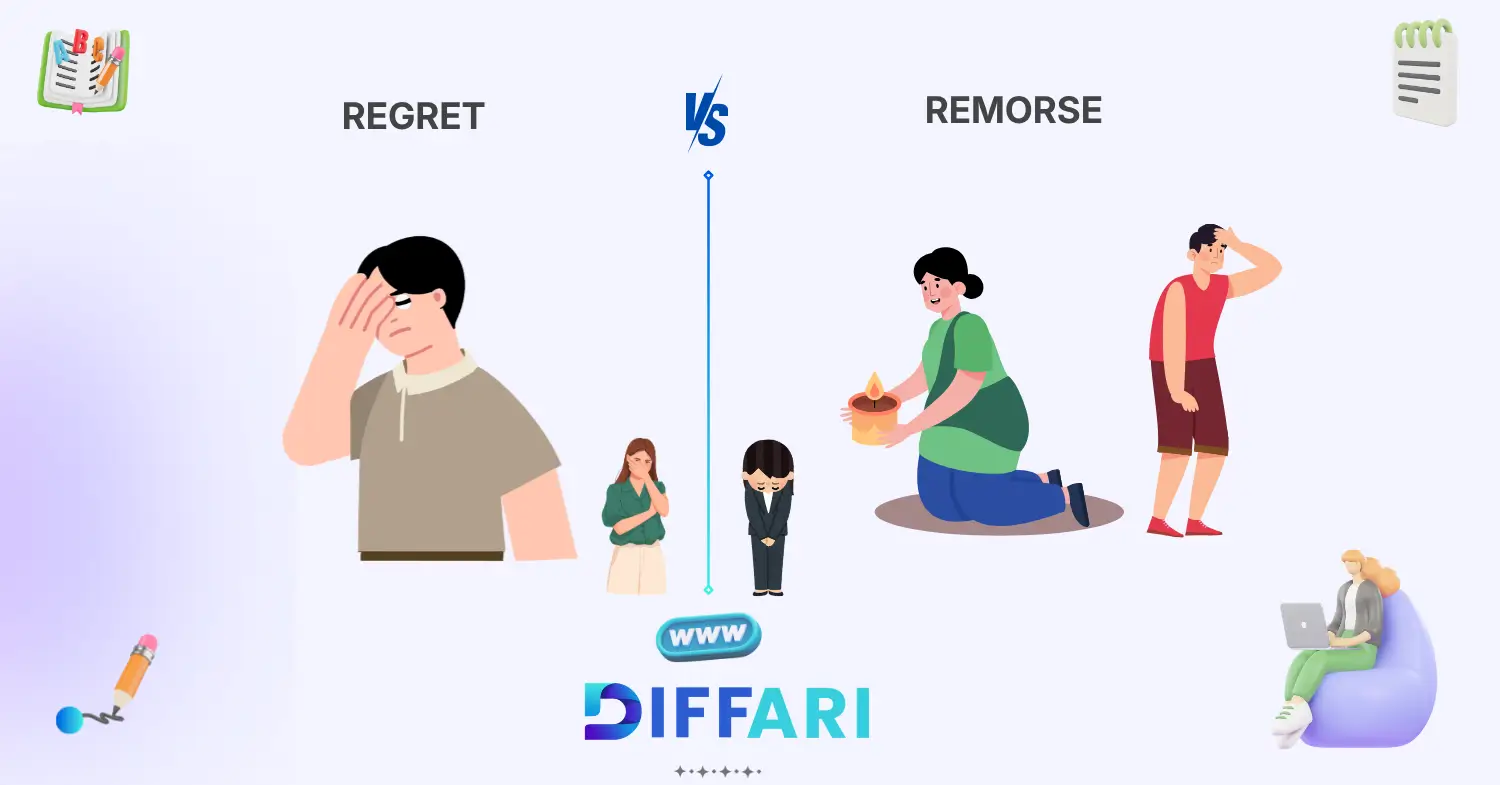

Difference between regret and remorse often comes up when someone reflects on past mistakes. Imagine saying something harsh to a friend and later feeling bad. But how bad? That’s where the difference matters.
In daily life, we use both words when we think about past actions. However, regret and remorse do not carry the same emotional weight. One feels lighter, while the other feels deeper.
Understanding the difference between regret and remorse helps you express emotions more clearly. Students, writers, and professionals use these words often in speech and writing.
In this guide, we will explore the difference between regret and remorse in a simple, clear way so you can use both words confidently in real situations.
Key Difference Between the Two
Regret is a feeling of sadness or disappointment about something that happened. It does not always involve deep guilt.
Remorse is a much stronger feeling. It includes guilt, responsibility, and emotional pain about hurting someone or doing something wrong.
In short, regret is lighter and more personal, while remorse is deeper and often connected to moral responsibility.
Why Is Their Difference Necessary to Know
Knowing the difference helps learners express emotions accurately. It improves speaking and writing skills, especially in essays and storytelling.
Professionals also benefit. In formal communication, using the right word shows clarity and emotional intelligence.
In society, clear communication avoids misunderstandings. When people confuse regret with remorse, they may sound less sincere or emotionally aware.
Let’s now explore how these words sound and are used.
🔊 Pronunciation
Regret
US: /rɪˈɡrɛt/
UK: /rɪˈɡret/
Remorse
US: /rɪˈmɔːrs/
UK: /rɪˈmɔːs/
Now that you know how to say them, let’s define them clearly before comparing further.
📚 Core Definitions
Regret
Regret is a feeling of sadness about something you wish had been different. It may or may not involve guilt.
Example:
Example: I regret not studying harder for the exam.
Remorse
Remorse is a deep feeling of guilt and sorrow for doing something wrong, especially when it affects others.
Example:
Example: He felt remorse after hurting his friend’s feelings.
📚 10 Clear Differences Between Regret and Remorse
1. Emotional Intensity
Regret is mild and reflective. Remorse is intense and painful.
Example for Regret:
I regret missing the meeting.
Example for Remorse:
I feel remorse for lying to my friend.
2. Duration
Regret may pass quickly. Remorse can last longer and stay in memory.
Example for Regret:
She regretted buying the wrong shoes.
Example for Remorse:
He felt remorse for years after the mistake.
3. Focus
Regret focuses on outcomes. Remorse focuses on actions and moral responsibility.
Example for Regret:
I regret not taking that job.
Example for Remorse:
I feel remorse for cheating in the exam.
4. Severity
Regret is less serious. Remorse is serious and emotionally heavy.
Example for Regret:
He regrets eating junk food.
Example for Remorse:
She feels remorse for breaking someone’s trust.
5. Rationality
Regret often involves logical thinking. Remorse is more emotional and moral.
Example for Regret:
I regret my decision after thinking about it.
Example for Remorse:
He feels deep remorse without needing to think much.
6. Formality
Regret is used in both formal and informal contexts. Remorse is often more formal and serious.
Example for Regret:
We regret to inform you…
Example for Remorse:
He expressed remorse in court.
7. Context of Use
Regret appears in daily life often. Remorse appears in serious situations.
Example for Regret:
I regret missing your call.
Example for Remorse:
The criminal showed remorse.
8. Psychological Impact
Regret causes mild disappointment. Remorse creates emotional pain and guilt.
Example for Regret:
She regrets her choice.
Example for Remorse:
He suffers from remorse after the incident.
9. Tone
Regret has a neutral or soft tone. Remorse has a heavy, emotional tone.
Example for Regret:
I regret not joining earlier.
Example for Remorse:
I feel deep remorse for my actions.
10. Expression Style
Regret is often simple and casual. Remorse is expressive and serious.
Example for Regret:
I regret it.
Example for Remorse:
I truly feel remorse for what I did.
🎯 Why Knowing the Difference Matters
Students need this difference to write clearly. It improves essays, storytelling, and emotional expression.
Professionals use these words in emails, reports, and formal communication. The right word shows clarity and respect.
In daily life, using the correct word helps express sincerity. It builds trust and avoids confusion.
Real-world consequences of confusion
If someone says “I regret it” instead of “I feel remorse,” it may sound less sincere. This can affect relationships and communication.
🧠 Why People Get Confused
Similar Meaning
Both words relate to feeling bad about the past. This overlap causes confusion.
Context-Based Usage
People often use regret in place of remorse in casual speech.
Informal Influence
In everyday language, people do not always distinguish emotional depth.
🎭 Connotation & Emotional Tone
Connotation (bold) = the emotional meaning associated with a word.
Regret
Positive: Shows reflection and learning
Example: I regret my mistake and learned from it.
Negative: Shows missed opportunity
Example: He regrets not trying harder.
Neutral: Simple acknowledgment
Example: I regret the delay.
Remorse
Positive: Shows deep moral awareness
Example: She felt remorse and apologized sincerely.
Negative: Shows guilt and pain
Example: He is full of remorse after the incident.
Neutral: Rare, but used in formal tone
Example: The statement expressed remorse.
🗣 Usage in Metaphors, Similes & Idioms
- “Filled with remorse” → deep guilt
- “Live with regret” → ongoing disappointment
Example:
He lives with regret, but she carries deep remorse for what happened.
📊 Comparison Table
| Feature | Regret | Remorse |
|---|---|---|
| Meaning | Sadness about past choice | Deep guilt for wrongdoing |
| Tone | Light, reflective | Heavy, emotional |
| Usage | Common, daily | Serious, formal |
| Context | Personal decisions | Moral or ethical actions |
| Formality | Flexible | More formal |
⚖️ Which Is Better in What Situation?
When to Use Regret
Use regret for small mistakes or missed chances. It fits casual conversations and daily situations.
When to Use Remorse
Use remorse for serious actions that hurt others. It shows deep emotion and responsibility.
Situational Clarity
Choose regret when the feeling is light. Choose remorse when the feeling is strong and moral.
Contextual Correctness
In formal writing, remorse sounds more serious. In daily talk, regret feels more natural.
📖 Literary or Cultural References
- Crime and Punishment (Novel, Fyodor Dostoevsky, 1866) – explores deep remorse
- A Christmas Carol (Story, Charles Dickens, 1843) – shows regret and transformation
- The Shawshank Redemption (USA, 1994) – themes of regret and redemption
❓ FAQs
1. Is regret the same as remorse?
No, regret is lighter and focuses on missed opportunities. Remorse is deeper and includes guilt. Remorse often involves moral responsibility.
2. Can you feel both regret and remorse?
Yes, people can feel both at the same time. For example, you may regret a decision and also feel remorse if it hurt someone.
3. Which word is stronger: regret or remorse?
Remorse is stronger. It carries emotional pain and guilt, while regret is more reflective.
4. Is remorse always about hurting others?
Mostly, yes. Remorse often involves actions that affect others negatively. It includes responsibility for harm.
5. Can regret be positive?
Yes, regret can lead to growth. It helps people learn and make better decisions in the future.
🏁 Conclusion
Understanding the difference between regret and remorse helps you express emotions with clarity. Regret reflects on missed chances, while remorse shows deep guilt.
Both words play an important role in communication. They help you explain feelings honestly and accurately.
When you use the right word, your message becomes clearer and more powerful. This matters in writing, speaking, and daily life.
Keep practicing these words in conversations and writing. With time, you will use them naturally and confidently 😊

Sajid Ali is an English language educator and content specialist with 7+ years of teaching experience. He holds master’s degrees in Information Technology and Education from the Virtual University of Pakistan and writes SEO-optimized, learner-friendly vocabulary content for diffari.com.