
Difference between frappuccino and latte often confuses people standing in a café line, unsure what to order. One looks icy and sweet, while the other feels warm and classic.
You may have seen someone sipping a cold, creamy drink with whipped cream and wondered if it’s the same as your regular coffee. That simple moment shows why this topic matters.
The difference between frappuccino and latte is not just about temperature. It also involves taste, ingredients, and even the experience of drinking them.
Understanding the difference between frappuccino and latte helps students, bloggers, and daily English users describe drinks clearly and confidently. Let’s explore it step by step.
Key Difference Between the Two
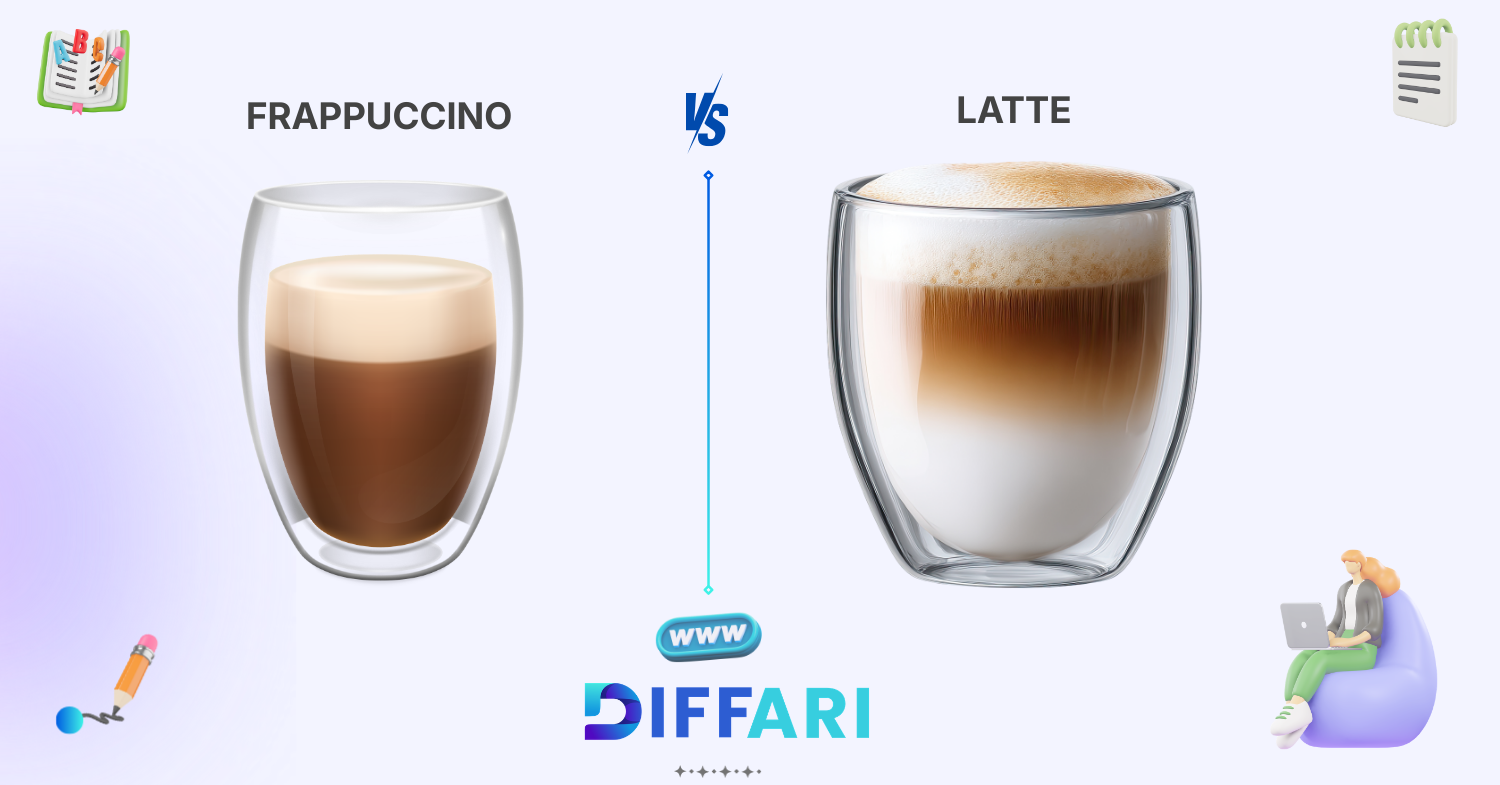
The main difference between a frappuccino and a latte lies in temperature, texture, and preparation.
A frappuccino is a cold, blended drink. It often includes ice, milk, syrup, and toppings. It feels like a dessert drink.
A latte is a hot or sometimes iced coffee drink. It mixes espresso with steamed milk. It has a smoother and more balanced coffee taste.
In simple words, frappuccino = cold, sweet, blended. Latte = warm, creamy, coffee-focused.
Why Is Their Difference Necessary to Know
Knowing this difference helps learners speak clearly about food and drinks. It improves vocabulary and builds confidence in real-life conversations.
For professionals, especially in hospitality or content writing, correct usage matters. It shows expertise and avoids confusion when describing menus or recipes.
In daily life, using the wrong term can lead to ordering the wrong drink. That small mistake can change your entire experience.
Now, let’s move deeper into how these two drinks sound and feel in language.
🔊 Pronunciation
Frappuccino
US: /ˌfræp.uˈtʃiː.noʊ/
UK: /ˌfræp.uˈtʃiː.nəʊ/
Latte
US: /ˈlɑː.teɪ/
UK: /ˈlæt.eɪ/
These pronunciations help you sound natural when ordering or discussing drinks. Now, let’s define each one clearly.
📚 Core Definitions
Frappuccino
A frappuccino is a cold, blended coffee drink made with ice, milk, and flavored syrups. It often includes whipped cream and toppings. It feels indulgent and fun.
Example:
She ordered a caramel frappuccino on a hot afternoon.
Latte
A latte is a coffee drink made with espresso and steamed milk. It has a mild coffee taste and a smooth texture. It feels calm and comforting.
Example:
He drinks a latte every morning before work.
📚 10 Clear Differences Between Frappuccino and Latte
1. Temperature
Frappuccino is always cold and icy. Latte is usually hot, though iced versions exist.
Example for Frappuccino: She chose a cold frappuccino in summer.
Example for Latte: He warmed up with a hot latte.
2. Texture
Frappuccino has a thick, slushy texture. Latte feels smooth and silky.
Example for Frappuccino: The drink felt like a milkshake.
Example for Latte: The latte felt light and creamy.
3. Sweetness
Frappuccino is often very sweet. Latte is mildly sweet or even unsweetened.
Example for Frappuccino: It tasted like dessert.
Example for Latte: The latte had a gentle taste.
4. Coffee Strength
Frappuccino has less strong coffee flavor. Latte highlights espresso taste.
Example for Frappuccino: The coffee taste was soft.
Example for Latte: The espresso stood out clearly.
5. Ingredients
Frappuccino uses ice, syrups, and toppings. Latte uses espresso and milk.
Example for Frappuccino: It had caramel and cream.
Example for Latte: It had just milk and coffee.
6. Purpose
Frappuccino feels like a treat. Latte feels like a daily drink.
Example for Frappuccino: She drank it as a reward.
Example for Latte: He drank it every morning.
7. Formality
Frappuccino sounds more casual and trendy. Latte sounds more classic and standard.
Example for Frappuccino: Teens love ordering it.
Example for Latte: Professionals often prefer it.
8. Context of Use
Frappuccino suits hot weather or relaxation. Latte fits work or study time.
Example for Frappuccino: She relaxed with it at the mall.
Example for Latte: He focused with a latte at his desk.
9. Psychological Impact
Frappuccino feels exciting and indulgent. Latte feels calming and focused.
Example for Frappuccino: It made her feel happy.
Example for Latte: It helped him stay calm.
10. Expression Style
Frappuccino suggests fun and flavor. Latte suggests simplicity and balance.
Example for Frappuccino: It looked colorful.
Example for Latte: It looked minimal and neat.
🎯 Why Knowing the Difference Matters
Students need this knowledge to improve vocabulary and avoid confusion in speaking and writing.
Professionals use these terms in menus, blogs, and conversations. Correct usage builds credibility and trust.
In social situations, using the right word helps you communicate clearly and confidently.
Real-world consequences of confusion
If you order a latte but expect a frappuccino, you may feel disappointed. Small language mistakes can change real experiences.
🧠 Why People Get Confused
Similar Naming
Both words sound Italian-inspired, which confuses learners.
Semantic Overlap
Both are coffee drinks, so people assume they are similar.
Context-Based Usage
Cafés use both terms often, sometimes without clear explanation.
Informal Speech
People casually mix terms, especially in daily conversation.
🎭 Connotation & Emotional Tone
Connotation = emotional meaning attached to a word.
Frappuccino
Positive: Fun and refreshing
Example: She enjoyed a cheerful frappuccino.
Negative: Too sweet or heavy
Example: It felt overly sugary.
Neutral: A cold blended drink
Example: He ordered a frappuccino.
Latte
Positive: Calm and comforting
Example: A latte relaxed her.
Negative: Too plain
Example: It felt boring to him.
Neutral: A coffee with milk
Example: He asked for a latte.
🗣 Usage in Metaphors, Similes & Idioms
- “Life feels like a latte, smooth and balanced.”
- “Her mood was like a frappuccino, sweet and energetic.”
These comparisons show how each word carries emotional meaning.
📊 Comparison Table
| Feature | Frappuccino | Latte |
|---|---|---|
| Meaning | Cold blended drink | Espresso with milk |
| Tone | Fun, indulgent | Calm, classic |
| Usage | Treat or refreshment | Daily coffee |
| Context | Casual, social | Work, study |
| Formality | Informal | Neutral/formal |
⚖️ Which Is Better in What Situation?
When to Use Frappuccino
Choose a frappuccino when you want a cold, sweet, and refreshing drink. It suits hot days and relaxed settings.
When to Use Latte
Pick a latte when you want a warm, smooth coffee. It works well in the morning or during work.
Situational Clarity
Use frappuccino in casual or fun contexts. Use latte in calm or professional settings.
Contextual Correctness
Match the drink to your mood and environment for the best experience.
📖 Literary or Cultural References
- Book: The Joy of Coffee (Food Writing, Corby Kummer, 2003)
- Movie: The Devil Wears Prada (USA, 2006) – shows café culture and coffee habits.
These references highlight how coffee culture shapes daily life.
❓ FAQs
1. Is a frappuccino stronger than a latte?
No, a latte usually has a stronger coffee taste because it uses espresso. A frappuccino often includes more milk, ice, and sugar, which reduces the coffee intensity.
2. Can a latte be cold like a frappuccino?
Yes, iced lattes exist. However, they are not blended like frappuccinos. They still maintain a smoother and less thick texture.
3. Which drink is healthier?
A latte is usually healthier because it has fewer added sugars. Frappuccinos often include syrups and whipped cream, which increase calories.
4. Why is frappuccino considered a dessert drink?
Because it is sweet, creamy, and often topped with whipped cream. Its taste and texture feel more like a milkshake than plain coffee.
5. Which one should beginners try?
Beginners may enjoy frappuccinos first because they are sweeter. However, lattes help develop a true taste for coffee over time.
🏁 Conclusion
The difference between frappuccino and latte becomes clear when you focus on temperature, texture, and taste. One feels like a dessert, while the other feels like a classic coffee.
Understanding this difference improves your daily communication. It helps you order correctly and describe drinks more naturally.
For students and writers, learning such distinctions sharpens vocabulary and builds confidence in real-world situations.
Keep practicing these words in conversations, menus, and writing. The more you use them, the more natural your English will feel ☕

Sajid Ali is an English language educator and content specialist with 7+ years of teaching experience. He holds master’s degrees in Information Technology and Education from the Virtual University of Pakistan and writes SEO-optimized, learner-friendly vocabulary content for diffari.com.