
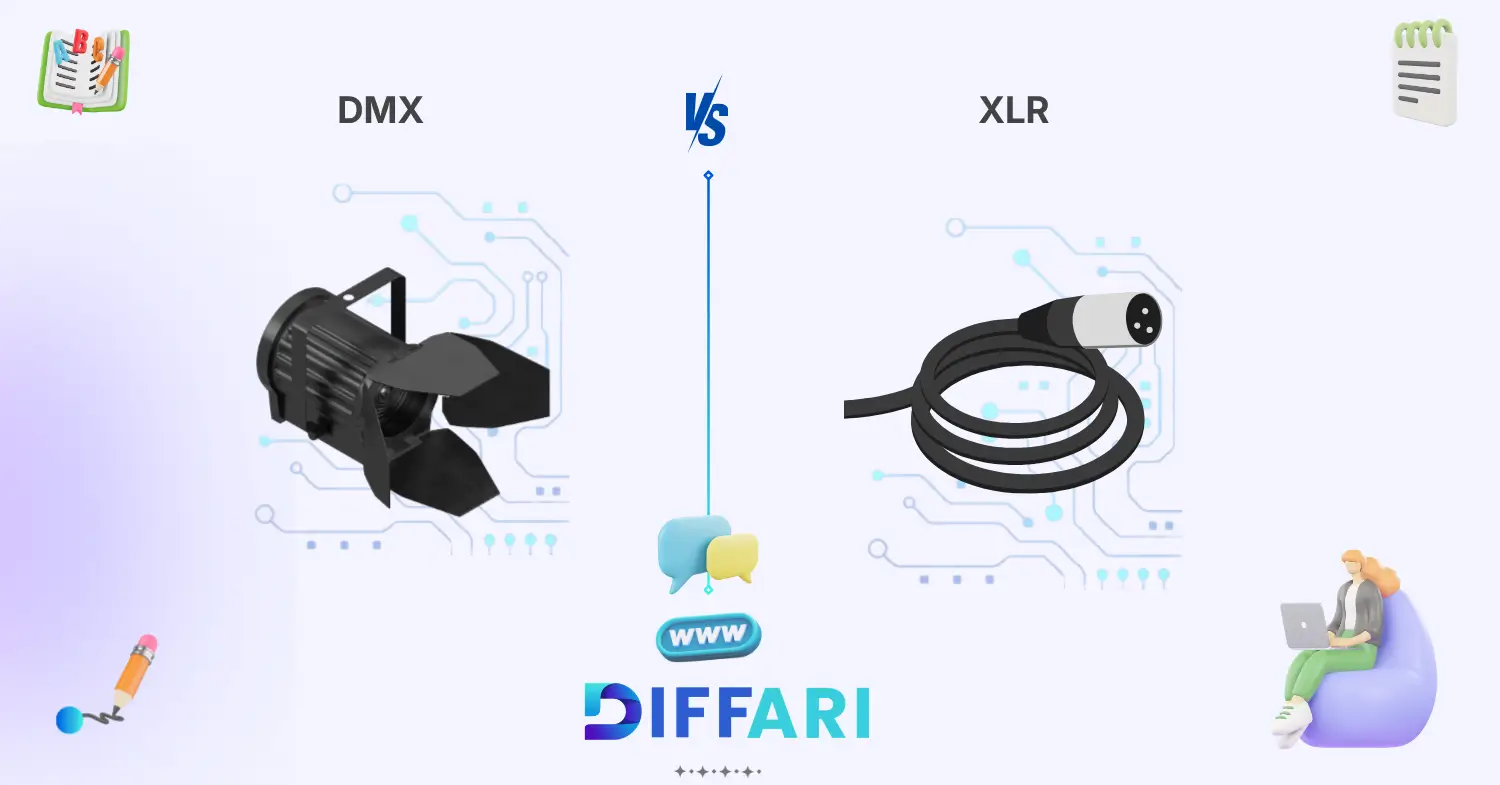

Difference between DMX and XLR often confuses beginners who work with stage lighting or audio equipment for the first time. Many people see the same cable shape and assume both are the same.
A beginner setting up a small stage may plug an XLR microphone cable into a DMX lighting controller and wonder why the lights do not respond. The equipment looks similar, but the function is different.
The difference between DMX and XLR becomes clear when you understand their purpose. One controls lighting signals, while the other carries audio signals in professional setups.
Understanding the difference between DMX and XLR helps sound engineers, event organizers, and learners avoid technical problems and build safer and more efficient systems. Let’s explore their core differences in detail.
Key Difference Between the Two
DMX is a digital communication protocol used to control lighting and stage effects. It sends control signals from a controller to lighting fixtures.
XLR is a type of connector and cable used mainly for audio signals such as microphones, speakers, and mixers.
In simple terms, DMX controls lights, while XLR carries sound signals.
The main difference lies in function, signal type, and usage environment, which we will explore in detail below.
Why Is Their Difference Necessary to Know
Knowing the difference between DMX and XLR is important for both learners and professionals in audio and lighting fields.
Students and beginners need this knowledge to avoid wiring mistakes during stage setup or studio installation. A wrong cable connection can damage equipment or stop a system from working.
Professionals such as sound engineers, lighting technicians, and event managers rely on this knowledge to ensure smooth operation during concerts, theaters, and live events.
In modern society, where live productions and digital media are growing rapidly, understanding DMX and XLR ensures safer and more reliable technical setups.
Now, let’s start with pronunciation and core definitions to build a strong foundation.
🔊 Pronunciation
DMX
US: /ˌdiː em ˈeks/
UK: /ˌdiː em ˈeks/
XLR
US: /ˌeks el ˈɑːr/
UK: /ˌeks el ˈɑː/
Both terms are pronounced letter by letter, which makes them easy to say in technical discussions.
Now, let’s clearly define each term before comparing them deeply.
📚 Core Definitions
DMX
DMX stands for Digital Multiplex. It is a communication protocol used to control stage lighting, effects, and visual equipment.
It sends digital signals from a controller to multiple lighting devices through a single cable. The tone is technical and neutral.
Example:
A lighting technician uses DMX to control stage lights during a concert.
XLR
XLR is a type of electrical connector commonly used in audio equipment such as microphones, speakers, and mixers.
It carries balanced audio signals to reduce noise and improve sound quality. The tone is technical and neutral.
Example:
A singer connects a microphone to a mixer using an XLR cable.
📚 10 Clear Differences Between DMX and XLR
1. Purpose
DMX controls lighting and stage effects, while XLR carries audio signals.
Example for DMX:
A lighting controller sends DMX signals to stage lights.
Example for XLR:
A microphone sends sound through an XLR cable.
2. Function
DMX is a communication protocol, while XLR is a physical connector.
Example for DMX:
DMX sends digital control instructions.
Example for XLR:
XLR connects audio devices.
3. Signal Type
DMX sends digital control signals, while XLR sends analog audio signals.
Example for DMX:
DMX controls brightness and color.
Example for XLR:
XLR carries voice signals.
4. Main Usage
DMX is used in lighting systems, while XLR is used in audio systems.
Example for DMX:
The stage lights run on DMX.
Example for XLR:
The speaker uses an XLR cable.
5. Industry Application
DMX is common in stage lighting and events, while XLR is common in music and broadcasting.
Example for DMX:
Concert lighting uses DMX.
Example for XLR:
Recording studios use XLR.
6. Data Transmission
DMX transmits control data, while XLR transmits sound signals.
Example for DMX:
DMX adjusts lighting speed.
Example for XLR:
XLR transfers microphone audio.
7. Cable Design
DMX cables require specific impedance for digital signals, while XLR cables are designed for balanced audio.
Example for DMX:
DMX cables support digital lighting signals.
Example for XLR:
XLR cables reduce audio noise.
8. System Role
DMX controls multiple devices, while XLR connects individual audio devices.
Example for DMX:
DMX controls many lights at once.
Example for XLR:
XLR connects one microphone.
9. Technical Complexity
DMX requires controllers and addressing, while XLR requires simple connections.
Example for DMX:
DMX uses channel addressing.
Example for XLR:
XLR plugs directly into devices.
10. Primary Output
DMX produces lighting effects, while XLR produces sound output.
Example for DMX:
DMX controls color and intensity.
Example for XLR:
XLR produces clear audio.
🎯 Why Knowing the Difference Matters
Students must understand the difference to avoid technical mistakes in practical learning environments. Correct knowledge helps them build confidence in audio and lighting setups.
Professionals need this understanding to ensure reliable performance during live events, concerts, and broadcasting. A wrong cable can cause system failure.
In social and professional communication, using correct technical terms improves credibility and prevents confusion.
Real-world consequences of confusion
Using an XLR cable in a DMX lighting system may cause signal failure.
Using a DMX cable for audio may create noise or poor sound quality.
Proper knowledge prevents equipment damage and technical issues.
🧠 Why People Get Confused
Similar Design
Both cables look almost the same with three-pin connectors. This visual similarity creates confusion.
Semantic Overlap
Both are used in stage and studio environments, which makes beginners think they serve the same purpose.
Context-Based Usage
Lighting and audio systems often exist together in events, so people mix up their roles.
Informal Speech Influence
Technicians sometimes casually call both cables “XLR cables,” which increases confusion.
🎭 Connotation & Emotional Tone
Connotation = emotional meaning attached to a word.
Connotation = the emotional meaning associated with a word.
DMX
Positive:
Represents advanced lighting control and professional setups.
Example: DMX makes stage lighting look professional.
Negative:
May feel complex for beginners.
Example: DMX systems seem difficult at first.
Neutral:
Used as a technical term.
Example: DMX controls lighting signals.
XLR
Positive:
Represents clear and professional audio quality.
Example: XLR cables improve sound clarity.
Negative:
May seem limited to audio use only.
Example: XLR cannot control lighting.
Neutral:
Technical connector term.
Example: XLR connects microphones.
🗣 Usage in Metaphors, Similes & Idioms
These technical terms rarely appear in idioms, but they are used metaphorically in professional discussions.
Example sentences:
- “The lighting system runs like DMX precision, smooth and controlled.”
- “His voice connects to the audience like an XLR cable, clear and strong.”
These expressions highlight control and clarity.
📊 Comparison Table
| Feature | DMX | XLR |
|---|---|---|
| Meaning | Lighting control protocol | Audio connector |
| Tone | Technical | Technical |
| Usage | Lighting systems | Audio systems |
| Context | Stage and events | Music and broadcasting |
| Formality | Professional | Professional |
⚖️ Which Is Better in What Situation?
When to Use DMX
Use DMX when controlling stage lights, effects, and visual equipment. It works best in concerts, theaters, and event lighting systems.
When to Use XLR
Use XLR when connecting microphones, speakers, and mixers. It ensures clear and balanced audio transmission.
Situational Clarity
DMX fits lighting control environments, while XLR fits audio environments. Each serves a specific technical role.
Contextual Correctness
Choosing the correct cable ensures safety, reliability, and smooth performance in professional setups.
📖 Literary or Cultural References
Book
Lighting Design Basics (Technical Guide, Mark Karlen, 2017)
This book explains DMX lighting systems and professional lighting control techniques.
Movie
Bohemian Rhapsody (UK/USA, 2018)
The film shows live concert setups where XLR microphones and DMX lighting systems are used together.
❓ FAQs
1. Is DMX the same as XLR?
No, DMX is a lighting control protocol, while XLR is an audio connector. They may look similar, but they serve different purposes. DMX controls lighting equipment, and XLR carries audio signals. Using them incorrectly can cause system issues. Always match the cable with the correct system.
2. Can I use an XLR cable for DMX lighting?
Sometimes it may work for short distances, but it is not recommended. DMX requires specific cable impedance for reliable digital signals. XLR cables are designed for audio, not digital lighting control. Using XLR for DMX may cause signal loss or flickering lights.
3. Why do DMX and XLR look the same?
Both use three-pin connectors, which makes them visually similar. Manufacturers designed them this way for compatibility and convenience. However, their internal wiring and signal type are different. This similarity often creates confusion among beginners.
4. Which one is more important, DMX or XLR?
Both are important in their respective fields. DMX is essential for lighting control, while XLR is essential for audio transmission. They work together in stage and studio environments. Neither is more important; each has a specific role.
5. Can DMX and XLR work together in one system?
Yes, they can work together in stage setups. DMX controls lighting, and XLR handles audio connections. Many concerts and events use both systems at the same time. Proper wiring ensures smooth performance.
🏁 Conclusion
The difference between DMX and XLR is clear when you understand their purpose and function. DMX controls lighting systems, while XLR connects audio equipment and carries sound signals.
This distinction helps students, technicians, and professionals avoid confusion and build reliable technical setups. Correct usage improves safety, efficiency, and performance in live events and studio environments.
Understanding these two terms also strengthens technical communication and practical knowledge in modern audio-visual industries. Keep learning, practice with real equipment, and apply this knowledge to build confident and professional setups in your future projects 🎛️

Sajid Ali is an English language educator and content specialist with 7+ years of teaching experience. He holds master’s degrees in Information Technology and Education from the Virtual University of Pakistan and writes SEO-optimized, learner-friendly vocabulary content for diffari.com.