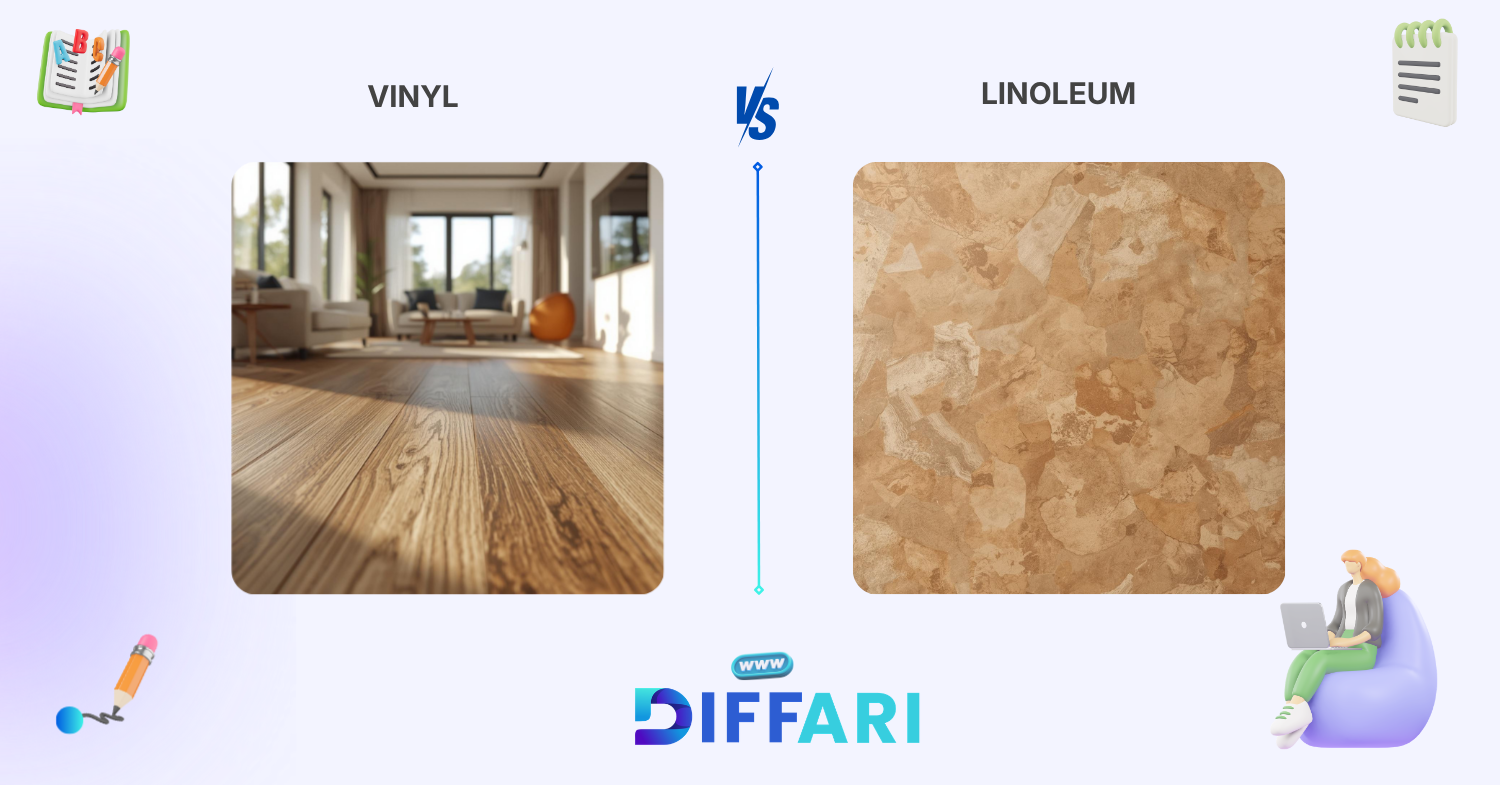

Difference between vinyl and linoleum often becomes confusing when people plan to renovate their homes or choose new flooring. A homeowner once walked into a flooring store and could not decide which material would last longer in the kitchen.
Many people hear these two names in interior design discussions. difference between vinyl and linoleum usually relates to material, durability, and environmental impact. Both look similar at first glance, but they serve different purposes.
When you understand the difference between vinyl and linoleum, you make smarter decisions. Students, homeowners, and professionals often need this knowledge for academic writing, construction work, or home improvement planning.
In simple terms, vinyl is a synthetic flooring material, while linoleum is a natural one. Knowing the difference between vinyl and linoleum helps you choose wisely and avoid costly mistakes. Now, let’s explore their key differences in detail.
Key Difference Between the Two
The main difference between vinyl and linoleum lies in their material and composition.
Vinyl is made from synthetic plastic materials, mainly PVC. It focuses on water resistance, affordability, and modern design flexibility. Many modern homes use vinyl because it is easy to install and maintain.
Linoleum, on the other hand, comes from natural materials like linseed oil, cork dust, wood flour, and natural resins. It focuses on sustainability, durability, and eco-friendliness. Traditional and environmentally conscious builders often prefer linoleum.
In short, vinyl is synthetic and flexible, while linoleum is natural and eco-friendly. This simple distinction helps beginners understand the core concept before diving deeper.
Why Is Their Difference Necessary to Know
Understanding the difference between vinyl and linoleum helps learners make informed decisions. Students studying interior design, architecture, or construction often encounter these materials in textbooks and projects. Clear knowledge improves their technical vocabulary and academic accuracy.
Professionals such as builders, designers, and homeowners also benefit from this knowledge. Choosing the wrong flooring can lead to higher maintenance costs or environmental concerns. Correct understanding prevents such issues and improves planning.
In society, flooring materials affect health, comfort, and sustainability. Eco-friendly choices support environmental protection, while durable materials reduce waste. Therefore, knowing this difference helps both individuals and communities make better decisions.
Now, let’s look at how these two words sound in real English pronunciation.
Pronunciation
Vinyl
US: /ˈvaɪ.nəl/
UK: /ˈvaɪ.nəl/
Linoleum
US: /lɪˈnoʊ.li.əm/
UK: /lɪˈnəʊ.li.əm/
The pronunciation is simple, but many learners shorten “linoleum” incorrectly. Understanding the sound helps you speak clearly and confidently. Now, let’s move to their core definitions.
Core Definitions
Vinyl
Vinyl is a synthetic flooring material made from plastic and chemical compounds. It is popular because it resists water and comes in many designs. The tone of the word is neutral and technical in everyday English.
Example:
The kitchen floor uses vinyl because it is easy to clean.
Linoleum
Linoleum is a natural flooring material made from linseed oil and other organic ingredients. It is known for durability and environmental safety. The tone is often associated with sustainability and traditional flooring.
Example:
The school installed linoleum floors to support eco-friendly construction.
10 Clear Differences Between Vinyl and Linoleum
1. Material Composition
Vinyl is made from synthetic plastic materials like PVC. It focuses on flexibility and water resistance. Linoleum is made from natural ingredients and supports environmental sustainability.
Example for Vinyl:
The bathroom uses vinyl flooring to prevent water damage.
Example for Linoleum:
The eco-house uses linoleum to reduce chemical exposure.
2. Environmental Impact
Vinyl is less eco-friendly because it contains synthetic chemicals. It may release small amounts of harmful substances over time. Linoleum is biodegradable and environmentally safe.
Example for Vinyl:
Some builders avoid vinyl due to environmental concerns.
Example for Linoleum:
Green architects prefer linoleum for sustainable projects.
3. Durability
Vinyl lasts long but may wear out under heavy pressure. It can tear or dent with sharp objects. Linoleum is stronger and can last for decades with proper care.
Example for Vinyl:
Heavy furniture damaged the vinyl surface.
Example for Linoleum:
The linoleum floor stayed strong for 25 years.
4. Water Resistance
Vinyl is highly water-resistant and suitable for wet areas. It works well in kitchens and bathrooms. Linoleum resists moisture but needs sealing for better protection.
Example for Vinyl:
Vinyl flooring works well in the laundry room.
Example for Linoleum:
Linoleum needs sealing in humid areas.
5. Maintenance
Vinyl requires simple cleaning and low maintenance. Regular mopping keeps it fresh and shiny. Linoleum needs polishing and occasional sealing to maintain quality.
Example for Vinyl:
She cleans the vinyl floor every week.
Example for Linoleum:
The linoleum floor needs regular polishing.
6. Cost
Vinyl is usually cheaper and fits tight budgets. Many homeowners choose it for affordable renovation. Linoleum costs more because it uses natural materials and lasts longer.
Example for Vinyl:
The family chose vinyl to save money on flooring.
Example for Linoleum:
The office installed linoleum for long-term value.
7. Design Variety
Vinyl offers many colors, textures, and patterns. It can even look like wood or stone. Linoleum has fewer design options and focuses on simple natural tones.
Example for Vinyl:
The living room vinyl looks like wooden planks.
Example for Linoleum:
The linoleum floor has a clean natural finish.
8. Installation Process
Vinyl is easy to install and often comes in tiles or sheets. Many people install it without professional help. Linoleum installation needs skill and proper sealing.
Example for Vinyl:
He installed vinyl flooring in one day.
Example for Linoleum:
A professional installed the linoleum floor.
9. Lifespan
Vinyl usually lasts 10–20 years depending on quality. It may need replacement earlier in busy areas. Linoleum can last 20–40 years with proper care.
Example for Vinyl:
The vinyl floor lasted 12 years.
Example for Linoleum:
The linoleum floor stayed strong for decades.
10. Appearance Over Time
Vinyl may fade or peel with heavy use. It loses shine over time. Linoleum develops a natural finish and keeps its look longer.
Example for Vinyl:
The vinyl surface faded near the door.
Example for Linoleum:
The linoleum floor aged beautifully.
Why Knowing the Difference Matters
Students need to understand the difference between vinyl and linoleum to improve technical vocabulary and academic writing. Clear knowledge helps them explain materials correctly in assignments and presentations.
Professionals such as architects and designers must know this difference to select the right flooring. Good decisions improve safety, durability, and environmental impact in construction projects.
Homeowners and society also benefit from this knowledge. Better flooring choices reduce waste, improve comfort, and support sustainable living.
Real‑World Consequences of Confusion
Choosing vinyl instead of linoleum in eco-projects may harm sustainability goals. Using linoleum in wet areas without sealing may cause damage. Clear understanding prevents costly mistakes and improves planning.
Why People Get Confused
Similar Spelling or Pronunciation
Vinyl and linoleum sound technical and appear in similar contexts. Many beginners assume they are the same type of flooring.
Semantic Overlap
Both refer to flooring materials used in homes and buildings. This similarity creates confusion in everyday discussions.
Context-Based Usage
Stores and advertisements sometimes use both terms loosely. This marketing language makes it harder to see the difference.
Influence of Informal Speech
In casual conversation, people often call all flexible flooring “vinyl.” This habit spreads misunderstanding.
Connotation & Emotional Tone
Connotation = emotional meaning attached to a word. 🎭
Vinyl
Positive:
Associated with affordability and modern design.
Example: Vinyl flooring gives a stylish and budget-friendly look.
Negative:
Sometimes linked to synthetic materials and environmental concerns.
Example: Some people avoid vinyl due to chemicals.
Neutral:
Used as a technical flooring term in construction.
Example: The builder installed vinyl in the kitchen.
Linoleum
Positive:
Connected with eco-friendly and natural living.
Example: Linoleum supports green building projects.
Negative:
Sometimes seen as old-fashioned or limited in design.
Example: Some designers think linoleum looks traditional.
Neutral:
Used as a standard flooring term in architecture.
Example: The school uses linoleum flooring.
Usage in Metaphors, Similes & Idioms
Vinyl and linoleum rarely appear in idioms, but they can appear in descriptive language.
Examples:
- The floor shined like vinyl under bright lights.
- The hallway felt as smooth as linoleum.
These expressions help create vivid imagery in writing.
Comparison Table
| Feature | Vinyl | Linoleum |
|---|---|---|
| Meaning | Synthetic flooring | Natural flooring |
| Tone | Modern and practical | Eco-friendly and traditional |
| Usage | Homes, offices, wet areas | Schools, eco-buildings |
| Context | Affordable and flexible | Durable and sustainable |
| Formality | Neutral technical term | Neutral technical term |
Which Is Better in What Situation
When to Use Vinyl
Vinyl works best in kitchens, bathrooms, and budget projects. It handles water well and installs easily. Many homeowners prefer vinyl for quick renovation and modern design.
When to Use Linoleum
Linoleum suits eco-friendly buildings and long-term projects. It lasts longer and supports sustainable construction. Schools and hospitals often choose linoleum.
Situational Clarity
Choose vinyl for affordability and water resistance. Choose linoleum for durability and environmental safety.
Contextual Correctness
Use vinyl in wet areas and modern homes. Use linoleum in green construction and long-term flooring plans.
Literary or Cultural References
Book: The Interior Design Handbook (Design Guide, Frida Ramstedt, 2020)
Discusses flooring materials including vinyl and linoleum in modern homes.
Movie: The Money Pit (USA, 1986)
Shows home renovation challenges, including flooring decisions.
These references show how flooring materials appear in real-life culture and media.
FAQs
1. Is vinyl better than linoleum?
Vinyl is better for water resistance and affordability. Linoleum is better for durability and eco-friendliness. The choice depends on your needs and environment. Both materials have unique advantages. You should consider budget, location, and long-term goals.
2. Which flooring lasts longer?
Linoleum usually lasts longer than vinyl. It can remain strong for 20–40 years with proper care. Vinyl lasts around 10–20 years. Maintenance and usage also affect lifespan. Proper installation increases durability.
3. Is linoleum more eco-friendly?
Yes, linoleum is more eco-friendly because it uses natural materials. It is biodegradable and safe for the environment. Vinyl contains synthetic chemicals. Many green builders prefer linoleum. It supports sustainable construction.
4. Can vinyl look like linoleum?
Vinyl can imitate many materials, including linoleum. Modern vinyl designs look natural and stylish. However, the material composition remains different. Appearance does not change the core structure. Always check the product details.
5. Which is easier to maintain?
Vinyl is easier to maintain because it needs simple cleaning. Linoleum requires sealing and polishing sometimes. Regular care keeps both materials strong. Vinyl suits busy households. Linoleum suits long-term eco projects.
Conclusion
The difference between vinyl and linoleum mainly lies in material, durability, and environmental impact. Vinyl offers affordability and water resistance, while linoleum provides sustainability and long-lasting performance.
Understanding this difference helps students, professionals, and homeowners make smarter decisions. Clear knowledge improves communication and prevents costly flooring mistakes in real-life situations.
Choosing the right material depends on your needs, budget, and environment. Vinyl works well in modern homes, while linoleum supports eco-friendly construction and long-term durability.
Keep learning practical vocabulary and material differences like this to improve your knowledge and decision-making. Small learning steps today lead to smarter choices tomorrow.

Sajid Ali is an English language educator and content specialist with 7+ years of teaching experience. He holds master’s degrees in Information Technology and Education from the Virtual University of Pakistan and writes SEO-optimized, learner-friendly vocabulary content for diffari.com.