
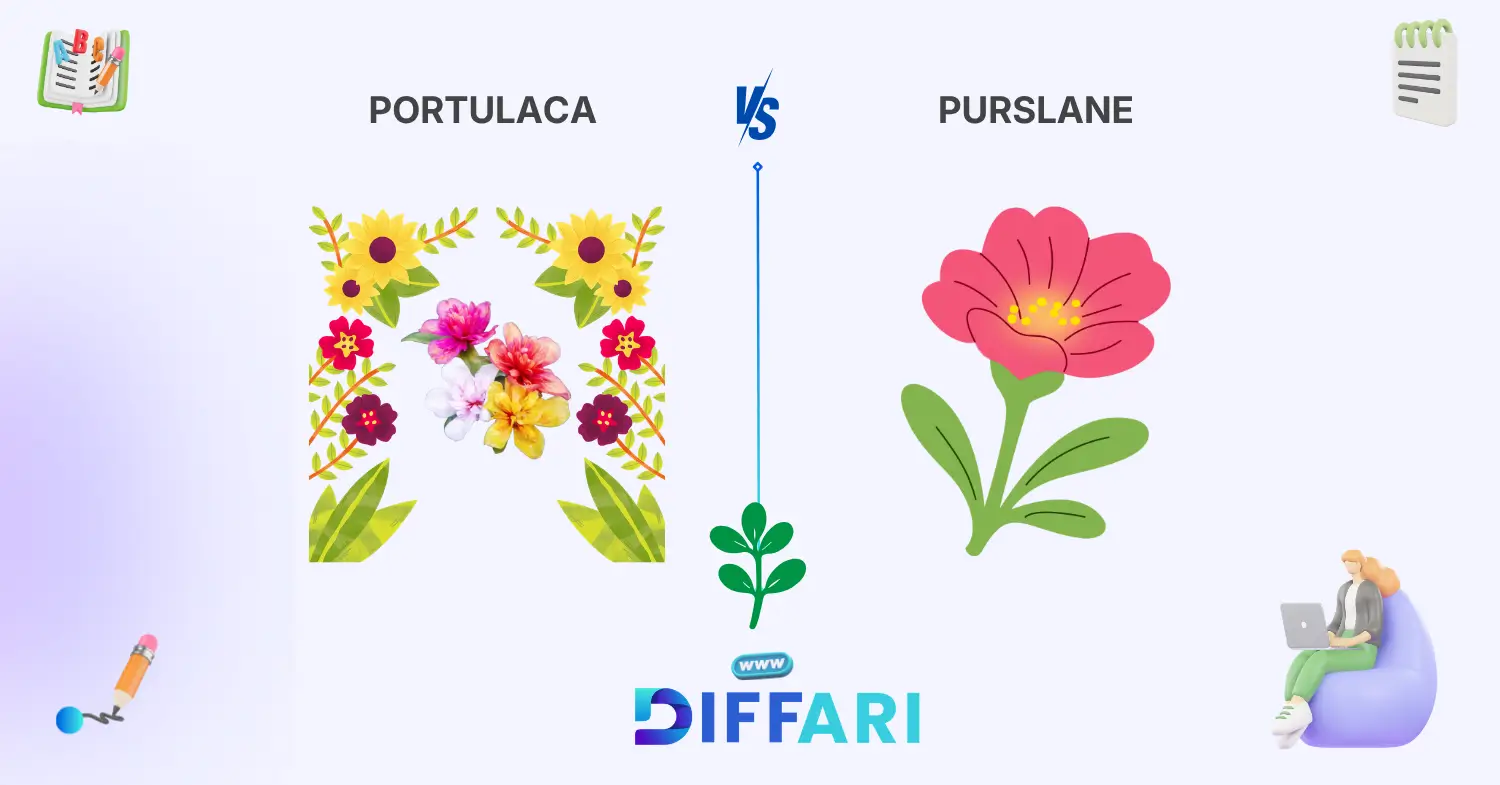

Difference between portulaca and purslane often confuses gardeners, plant lovers, and even beginners who want to grow beautiful or edible plants in their gardens. Imagine visiting a nursery and seeing bright colorful flowers labeled portulaca while another green leafy plant is called purslane. At first glance, both look similar, and many people assume they are the same plant.
In simple terms, portulaca is usually grown as an ornamental flowering plant, while purslane is commonly grown as an edible leafy plant used in cooking. Understanding the difference between portulaca and purslane helps gardeners choose the right plant for decoration or food.
Many plant enthusiasts search for the difference between portulaca and purslane because both belong to the same plant family and share similar names and appearance. However, their purpose, growth pattern, and usage are quite different in gardening and agriculture.
This guide explains the difference between portulaca and purslane in a clear and friendly way so learners, gardeners, and professionals can easily identify and grow the right plant.
Key difference between the Two
The key difference between portulaca and purslane lies in their purpose and usage.
Portulaca is mainly an ornamental flowering plant grown for beauty in gardens, hanging baskets, and pots. It produces colorful flowers and enhances landscape design.
Purslane is an edible leafy plant grown for food and nutrition. It is commonly used in salads, soups, and traditional dishes because of its rich nutrients.
In simple words, portulaca is grown for flowers, while purslane is grown for food.
Why is their difference necessary to know
Understanding the difference between portulaca and purslane is important for learners because it improves plant identification and gardening knowledge. Many beginners mistakenly try to eat ornamental portulaca or ignore edible purslane due to confusion.
For gardeners, farmers, and horticulture experts, this difference is essential. Choosing the right plant helps in proper garden planning, food production, and landscape design. It also prevents health risks and supports efficient plant care.
In society, awareness of edible and ornamental plants promotes healthy food habits and environmental understanding. People who know the difference can grow nutritious plants and beautiful gardens at the same time.
Now, let’s look at how these words are pronounced.
Pronunciation
Portulaca
US: /ˌpɔːrtʃəˈleɪkə/
UK: /ˌpɔːtjuːˈleɪkə/
Purslane
US: /ˈpɜːrsleɪn/
UK: /ˈpɜːsleɪn/
Clear pronunciation helps learners speak confidently in gardening discussions and plant identification conversations. Now, let’s understand their core definitions.
Core Definitions
Portulaca
Portulaca is a flowering plant commonly known as moss rose and scientifically called Portulaca grandiflora. It is grown for its colorful flowers and decorative value in gardens and pots. The emotional tone is pleasant and ornamental.
Example:
The gardener planted portulaca to create a bright summer flower bed.
Purslane
Purslane is a leafy green plant scientifically called Portulaca oleracea and is widely used as an edible vegetable. It is rich in vitamins and omega-3 fatty acids and grows naturally in warm climates. The emotional tone is practical and nutritional.
Example:
The farmer harvested purslane to use in fresh salads.
10 Clear Differences Between Portulaca and Purslane
Purpose
Portulaca is grown mainly for decorative flowers, while purslane is grown for food and nutrition.
Example for Portulaca:
The garden looked colorful with blooming portulaca.
Example for Purslane:
The chef added purslane to the salad.
Appearance
Portulaca has bright and colorful flowers, while purslane has small yellow flowers and thick green leaves.
Example for Portulaca:
Portulaca flowers opened in sunlight.
Example for Purslane:
Purslane leaves looked thick and juicy.
Edibility
Portulaca is usually not eaten, while purslane is edible and nutritious.
Example for Portulaca:
The gardener used portulaca only for decoration.
Example for Purslane:
The family cooked purslane for dinner.
Growth Habit
Portulaca grows as a spreading ornamental plant, while purslane grows as a wild or cultivated leafy plant.
Example for Portulaca:
Portulaca spread across the flower bed.
Example for Purslane:
Purslane grew naturally in the field.
Nutritional Value
First has little nutritional use, while the latter is rich in vitamins and omega-3 fatty acids.
Example for Portulaca:
Portulaca was planted for beauty.
Example for Purslane:
Purslane provided healthy nutrients.
Gardening Use
Portulaca is used in landscaping and decoration, while the latter is used in kitchen gardening.
Example for Portulaca:
The designer used portulaca in landscape planning.
Example for Purslane:
The gardener grew purslane in a vegetable garden.
Water Needs
First needs less water and grows well in dry soil, while purslane needs moderate watering for healthy leaves.
Example for Portulaca:
Portulaca survived in dry weather.
Example for Purslane:
Purslane needed regular watering.
Sunlight Requirement
Portulaca loves full sunlight for blooming, while the latter grows in both sun and partial shade.
Example:
Portulaca flowers opened in strong sunlight.
Example:
Purslane grew well in partial shade.
Market Value
Portulaca is sold as an ornamental plant, while purslane is sold as a vegetable.
Example:
The nursery sold portulaca plants.
Example:
The market sold fresh purslane.
Expression Style
Portulaca appears in gardening and landscaping discussions, while purslane appears in food and agriculture discussions.
Example:
Portulaca improved garden beauty.
Example:
Purslane improved diet quality.
Why Knowing the Difference Matters
Students must understand the difference between portulaca and purslane to improve plant vocabulary and gardening knowledge. It helps them identify plants correctly and avoid confusion.
Professionals such as gardeners, farmers, and landscapers need this knowledge to plan gardens and grow suitable plants. Proper identification improves productivity and plant care.
In society, understanding edible and ornamental plants supports healthy living and environmental awareness.
Real-world consequences of confusion
If someone eats ornamental portulaca thinking it is purslane, it may cause health risks. Similarly, ignoring purslane can mean missing a nutritious food source. Correct identification prevents these problems.
Why People Get Confused
Similar spelling or pronunciation
Both words look and sound similar, which causes confusion.
Semantic overlap
Both belong to the same plant family and look alike.
Context-based usage
Gardeners sometimes use portulaca as a general term.
Influence of informal speech
Many people use purslane and portulaca interchangeably.
Connotation & Emotional Tone
Connotation = emotional meaning attached to a word.
The emotional meaning associated with a word.
Portulaca
Positive: Beautiful and decorative
Negative: Not useful as food
Neutral: Common garden flower
Example:
Portulaca made the garden colorful.
Purslane
Positive: Healthy and nutritious
Negative: Sometimes considered a weed
Neutral: Common edible plant
Example:
Purslane improved the meal’s nutrition.
Usage in Metaphors, Similes & Idioms
These plant names are not commonly used in idioms, but they appear in gardening expressions.
Example sentence:
The gardener planted portulaca for beauty and purslane for healthy food in the backyard.
Comparison Table
Feature | Portulaca | Purslane
Meaning | Ornamental flowering plant | Edible leafy plant
Tone | Decorative and pleasant | Nutritional and practical
Usage | Gardening and landscaping | Cooking and farming
Context | Flower beds and pots | Vegetable gardens and fields
Formality | Botanical and gardening term | Agricultural and food term
Which Is Better in What Situation
When to use Portulaca
Portulaca is best for garden decoration, landscaping, and colorful flower beds. It works well in dry and sunny areas.
When to use Purslane
Purslane is best for kitchen gardening and healthy food production. It is useful in salads and traditional dishes.
Situational clarity
Choose portulaca for beauty and purslane for nutrition.
Contextual correctness
Using the correct plant improves gardening and food planning.
Literary or Cultural References
Book: The Vegetable Gardener’s Bible (Gardening, Edward C. Smith, 2000)
This book discusses edible plants like purslane in gardening.
Movie: The Biggest Little Farm (USA, 2018)
This documentary shows plant diversity and edible crops in farming.
FAQs
- Is portulaca the same as purslane?
No, portulaca and purslane are not exactly the same. Portulaca is grown for beauty, and purslane is grown for nutrition. Understanding the difference helps in proper plant use. - Can portulaca be eaten like purslane?
Portulaca is generally not used as food, while purslane is edible and safe to eat. Some species of portulaca may not be suitable for consumption. Purslane is widely used in cooking and salads. Always confirm plant identity. - Why is purslane considered healthy?
Purslane contains vitamins, minerals, and omega-3 fatty acids. It supports heart health and improves nutrition. Many cultures use purslane in traditional dishes. It grows easily and provides natural health benefits. - Is portulaca easy to grow?
Yes, portulaca is easy to grow in sunny and dry conditions. It requires little water and minimal care. It blooms beautifully in summer and spreads quickly. Gardeners prefer it for low-maintenance landscaping. It is ideal for beginners. - Can both plants grow in the same garden?
Yes, both portulaca and purslane can grow in the same garden. Portulaca adds beauty, and purslane adds nutrition. Growing them together creates a balanced garden.
Conclusion
The difference between portulaca and purslane is mainly based on their purpose, appearance, and usage. Portulaca is a colorful ornamental plant grown for garden beauty, while purslane is a nutritious edible plant grown for food. Although they belong to the same plant family, their roles in gardening and daily life are quite different.
Understanding this difference helps gardeners, students, and plant lovers make better decisions. It improves plant identification, supports healthy eating, and enhances garden planning. Choosing the right plant ensures both beauty and nutrition in your garden.
Keep learning about plant differences like this, and your gardening knowledge will grow naturally with time 🌿

Sajid Ali is an English language educator and content specialist with 7+ years of teaching experience. He holds master’s degrees in Information Technology and Education from the Virtual University of Pakistan and writes SEO-optimized, learner-friendly vocabulary content for diffari.com.