
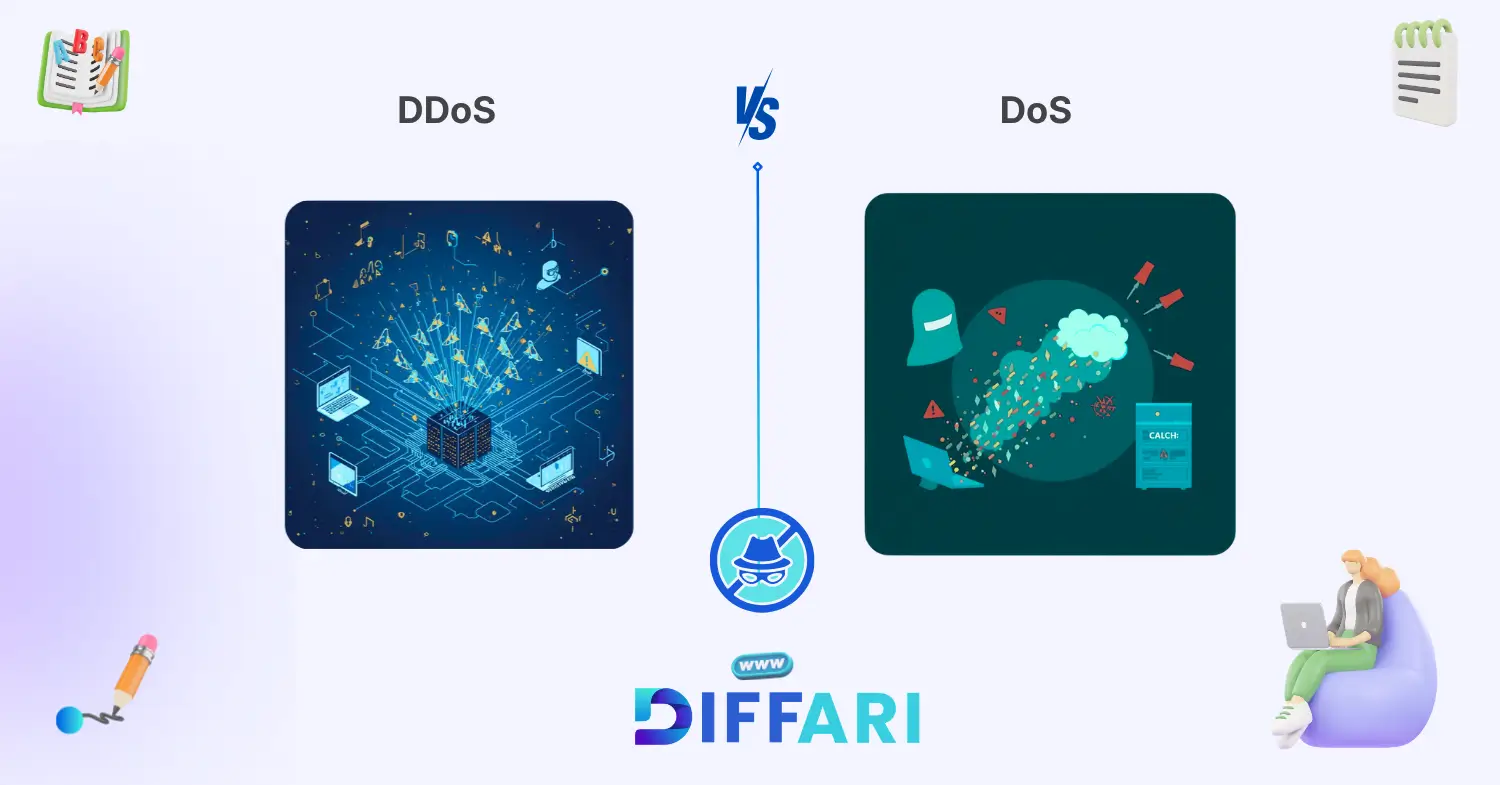

Difference between ddos and dos becomes important when a website suddenly stops working and users cannot access it. Imagine trying to open your favorite website, but it keeps loading and never opens.
Many beginners in cybersecurity hear about DDoS and DoS attacks but struggle to understand how they are different. Both attacks target systems and networks, yet they work in different ways.
Understanding the difference between ddos and dos helps students, IT learners, and internet users recognize how cyberattacks happen and how systems get overloaded.
In simple terms, difference between ddos and dos explains how attackers use one system or multiple systems to shut down a website or network. Let’s explore their key differences step by step.
Key Difference Between the Two
The main difference between DDoS and DoS lies in the number of attacking systems.
A DoS attack comes from a single computer or source that floods a server with requests.
A DDoS attack comes from many computers working together to attack a server at the same time.
In short:
- DoS = single source attack
- DDoS = multiple source attack
This difference makes DDoS more dangerous and harder to stop.
Why Is Their Difference Necessary to Know
Understanding the difference between DDoS and DoS is important for both beginners and professionals. Cybersecurity threats are increasing every day, and knowledge helps people stay safe.
Students and learners benefit because they can understand basic cyber threats and how networks work. This builds a strong foundation in cybersecurity and IT education.
Professionals and organizations benefit because they can protect their websites and systems from attacks. Businesses rely on secure servers to keep operations running smoothly.
Society also benefits because better cybersecurity knowledge reduces online risks and protects digital services. Now let’s look at how to pronounce these terms correctly.
Pronunciation
DDoS
US: /ˌdiː.diːˈoʊ.ɛs/
UK: /ˌdiː.diːˈəʊ.es/
DoS
US: /ˌdiːˈoʊ.ɛs/
UK: /ˌdiːˈəʊ.es/
These abbreviations are usually spoken letter by letter. Understanding pronunciation helps learners discuss cybersecurity topics confidently.
Now let’s clearly define both terms before comparing them in detail.
Core Definitions
DDoS
DDoS stands for Distributed Denial of Service. It is a cyberattack where many computers attack a server or website at the same time to overload it and make it unavailable.
The tone of this term is technical and serious because it relates to cybersecurity threats.
Example:
A hacker uses thousands of infected computers to send traffic to a website and crash it.
DoS
DoS stands for Denial of Service. It is a cyberattack where a single computer or system sends excessive requests to a server to stop it from working.
The tone is also technical but simpler than DDoS.
Example:
A hacker uses one computer to send repeated requests and slow down a website.
10 Clear Differences Between DDoS and DoS
1. Source of Attack
DDoS uses multiple systems to attack a server at once.
DoS uses a single system.
Example for DDoS:
Many computers attack a website simultaneously.
Example for DoS:
One computer floods the server.
2. Scale of Attack
DDoS attacks are large and powerful.
DoS attacks are smaller.
Example for DDoS:
Thousands of requests hit a server.
Example for DoS:
Hundreds of requests hit a server.
3. Complexity
DDoS attacks are complex and coordinated.
DoS attacks are simpler.
Example for DDoS:
Botnets control many systems.
Example for DoS:
One attacker sends repeated traffic.
4. Detection Difficulty
DDoS is harder to detect.
DoS is easier to identify.
Example for DDoS:
Traffic comes from many locations.
Example for DoS:
Traffic comes from one location.
5. Damage Level
DDoS causes severe damage.
DoS causes limited damage.
Example for DDoS:
A major website crashes.
Example for DoS:
A small service slows down.
6. Cost of Attack
DDoS requires more resources.
DoS requires fewer resources.
Example for DDoS:
Hackers build bot networks.
Example for DoS:
Hackers use one system.
7. Defense Strategy
DDoS needs advanced protection.
DoS needs basic protection.
Example for DDoS:
Firewalls and traffic filters are required.
Example for DoS:
Blocking one IP stops the attack.
8. Attack Speed
DDoS spreads quickly.
DoS spreads slowly.
Example for DDoS:
Traffic spikes instantly.
Example for DoS:
Traffic increases gradually.
9. Network Impact
DDoS affects entire networks.
DoS affects specific systems.
Example for DDoS:
Internet services go down.
Example for DoS:
One website stops working.
10. Control System
DDoS uses botnets.
DoS uses a single machine.
Example for DDoS:
Infected devices attack together.
Example for DoS:
One attacker controls traffic.
Why Knowing the Difference Matters
Students need to know the difference between DDoS and DoS to understand cybersecurity basics. It builds awareness and helps them learn network protection.
Professionals must understand this difference to protect websites, servers, and business systems. It helps them design better security strategies.
Clear understanding also improves communication in IT teams and reduces mistakes in threat response.
Real-world consequences of confusion
Confusing DDoS and DoS can lead to weak security planning. A company might apply simple protection against a complex DDoS attack and fail to stop it. This can cause financial and service losses.
Why People Get Confused
Similar Abbreviations
Both terms look almost the same. Only one letter separates them, which creates confusion.
Technical Language
Cybersecurity terms often sound complex. Beginners struggle to understand them easily.
Context-Based Usage
People sometimes use DoS and DDoS interchangeably in casual discussion.
Informal Speech Influence
In conversations, people shorten explanations and mix both terms.
Connotation & Emotional Tone
Connotation = emotional meaning attached to a word.
DDoS
Positive:
Used in learning cybersecurity and awareness.
Example:
Students learn DDoS protection methods.
Negative:
Associated with cybercrime and attacks.
Example:
Hackers launched a DDoS attack.
Neutral:
Used in technical discussion.
Example:
The system detected DDoS traffic.
DoS
Positive:
Used in cybersecurity education.
Example:
Students study DoS prevention.
Negative:
Linked with hacking.
Example:
The attacker started a DoS attack.
Neutral:
Used in technical documentation.
Example:
The report explains DoS risks.
Usage in Metaphors, Similes & Idioms
Cybersecurity rarely uses idioms, but simple comparisons help understanding.
DDoS is like a crowd blocking a road.
DoS is like one person blocking a door.
These metaphors make learning easier and clearer.
Comparison Table
| Feature | DDoS | DoS |
|---|---|---|
| Meaning | Distributed attack | Single-source attack |
| Tone | Technical and severe | Technical and basic |
| Usage | Cybersecurity and networks | Cybersecurity and networks |
| Context | Large-scale attacks | Small-scale attacks |
| Formality | Formal technical term | Formal technical term |
Which Is Better in What Situation
When to Use DDoS
Use DDoS when talking about large-scale cyberattacks involving multiple systems. It fits discussions about botnets, large network failures, and major security threats.
When to Use DoS
Use DoS when referring to small or single-source attacks. It suits beginner cybersecurity explanations and basic network attack discussions.
Situational Clarity
Choosing the correct term improves technical accuracy and communication in cybersecurity discussions.
Contextual Correctness
Always match the term with the scale of the attack to avoid confusion and miscommunication.
Literary or Cultural References
Book
Cybersecurity Essentials (Technology, Charles J. Brooks, 2018)
Explains network threats including DoS and DDoS attacks.
Movie
Blackhat (USA, 2015)
Shows cyberattacks and digital security threats in a dramatic setting.
FAQs
1. What is the main difference between DDoS and DoS?
The main difference is the number of attacking systems. DoS uses one computer, while DDoS uses many computers. DDoS is more powerful and harder to stop. Both attacks aim to shut down services. DDoS creates larger network traffic.
2. Which attack is more dangerous?
DDoS is more dangerous because it uses many systems. It creates massive traffic and overloads servers quickly. It is difficult to block because traffic comes from many locations. DoS is easier to control and stop.
3. Can small websites face DDoS attacks?
Yes, small websites can face DDoS attacks. Attackers sometimes target small sites to test their tools. Even small attacks can slow down services. Basic protection helps reduce risks.
4. How can companies protect against DDoS and DoS?
Companies use firewalls, traffic monitoring, and security systems. They block suspicious IP addresses and filter traffic. Cloud protection services also help. Regular monitoring improves defense.
5. Is DDoS illegal?
Yes, DDoS attacks are illegal in most countries. They damage systems and disrupt services. Cyber laws punish attackers with fines and jail. Governments treat cyberattacks seriously.
Conclusion
The difference between ddos and dos mainly depends on the number of attacking systems and the scale of the attack. DoS uses one system, while DDoS uses many systems to overload networks.
Understanding this difference helps learners, professionals, and internet users recognize cybersecurity threats and respond correctly. It also improves technical knowledge and communication in IT discussions.
Clear knowledge of these terms supports better security planning and safer digital environments. Learning basic cybersecurity concepts builds confidence in understanding modern technology.
Keep exploring cybersecurity topics and practice using these terms correctly in discussions, studies, and real-world learning to strengthen your technical understanding and awareness.

Sajid Ali is an English language educator and content specialist with 7+ years of teaching experience. He holds master’s degrees in Information Technology and Education from the Virtual University of Pakistan and writes SEO-optimized, learner-friendly vocabulary content for diffari.com.