
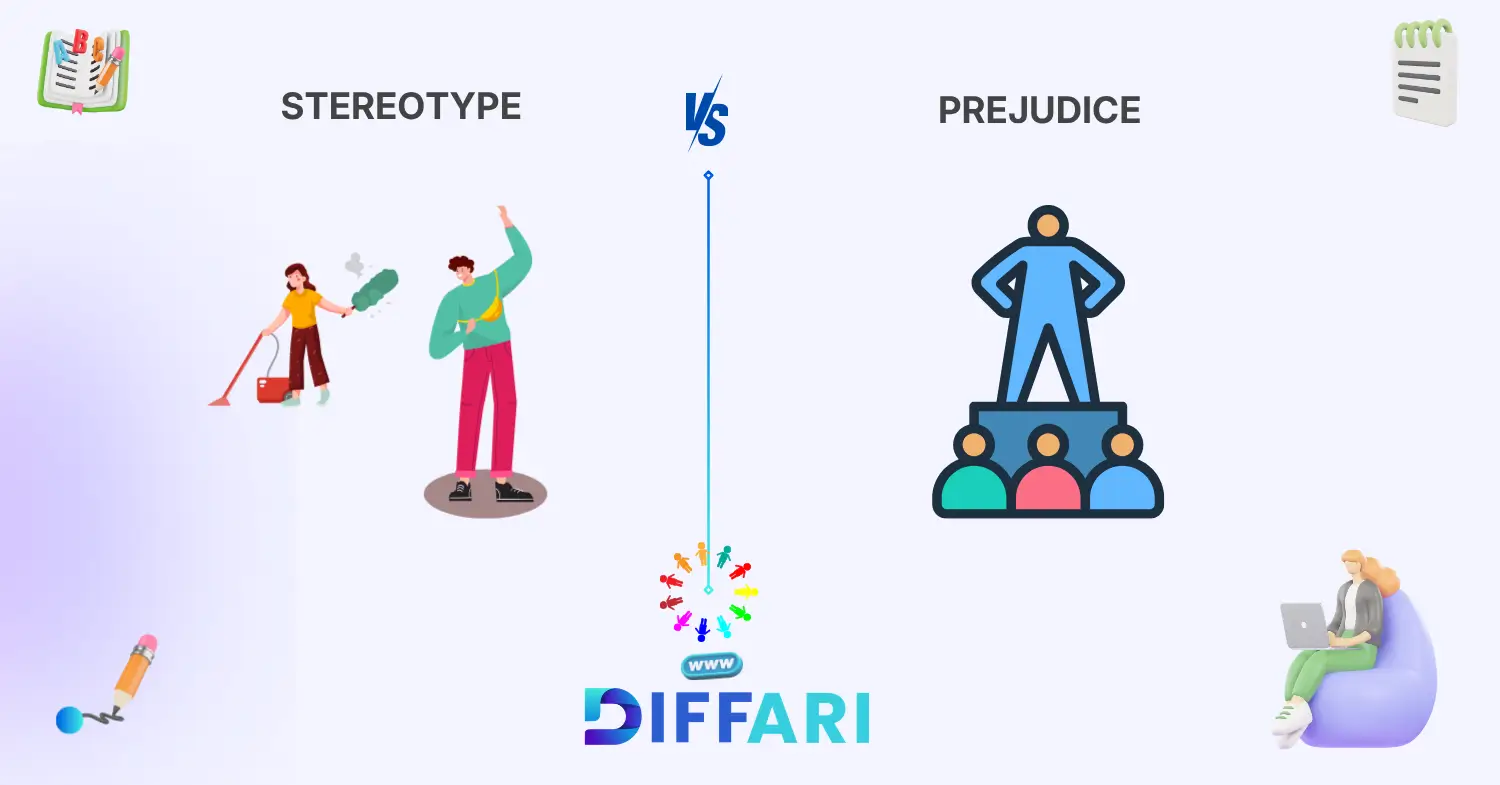

Difference between stereotype and prejudice becomes clear when we observe everyday conversations in schools, workplaces, and social media. People often make quick judgments about others based on appearance, background, or group identity without realizing the impact of their words.
In simple terms, a stereotype is a generalized belief about a group of people, while prejudice is a negative attitude or feeling toward them. Understanding the difference between stereotype and prejudice helps learners, professionals, and society reduce bias and communicate more respectfully.
Many students search for the difference between stereotype and prejudice because both terms appear in psychology, sociology, and English vocabulary lessons. The two concepts are closely related, which makes them easy to confuse.
This guide explains the difference between stereotype and prejudice in a clear, friendly, and structured way so readers can understand their meanings, uses, and real-world implications.
Key Difference Between the Two
The key difference between stereotype and prejudice lies in belief and emotion.
A stereotype is a general belief or assumption about a group of people. It focuses on thinking or perception.
Prejudice is a negative attitude or feeling toward a group or individual based on that belief. It focuses on emotion and judgment.
In simple words, stereotype is what people think, while prejudice is what people feel.
This distinction builds a strong foundation for understanding why these terms matter in society.
Why Is Their Difference Necessary to Know
Understanding the difference between stereotype and prejudice helps learners develop social awareness and critical thinking. It teaches them how language and beliefs influence behavior and relationships.
For professionals such as teachers, psychologists, and HR managers, this difference is essential for creating fair and inclusive environments. It helps them identify bias and promote equality in workplaces and institutions.
In society, recognizing stereotypes and prejudice reduces discrimination and promotes respectful communication. People become more mindful of their words and actions, which leads to better social harmony.
Now, let us explore how these terms are pronounced and used in real communication.
Pronunciation
Stereotype
US: /ˈsteriətaɪp/
UK: /ˈsteriətaɪp/
Prejudice
US: /ˈpredʒədɪs/
UK: /ˈpredʒədɪs/
Both words are commonly used in psychology, sociology, and English discussions. Clear pronunciation helps learners speak confidently in academic and social settings.
Now, let us define both terms clearly before comparing them in depth.
Core Definitions
Stereotype
A stereotype is a fixed or oversimplified belief about a group of people. It may be positive, negative, or neutral, but it usually ignores individual differences. The emotional tone is often neutral but can become harmful if repeated frequently.
Example:
Example: Many people believe the stereotype that all teenagers are irresponsible.
Prejudice
Prejudice is a negative attitude or feeling toward a group or individual based on stereotypes or assumptions. It often leads to unfair treatment or discrimination. The emotional tone is usually negative and judgmental.
Example:
Example: His prejudice against immigrants affected his decisions at work.
10 Clear Differences Between Stereotype and Prejudice
1. Emotional Intensity
Stereotype involves general beliefs and may not carry strong emotions. Prejudice involves negative emotions and judgments toward others.
Example for Stereotype:
Example: People stereotype gamers as antisocial.
Example for Prejudice:
Example: He refused to hire gamers due to prejudice.
2. Duration
Stereotypes can exist for long periods in society as shared beliefs. Prejudice often grows stronger over time through personal experiences and social influence.
Example for Stereotype:
Example: The stereotype about artists has existed for decades.
Example for Prejudice:
Example: His prejudice developed over years.
3. Focus
Stereotype focuses on general ideas about groups. Prejudice focuses on negative feelings toward individuals or groups.
Example for Stereotype:
Example: The stereotype describes a group.
Example for Prejudice:
Example: Prejudice targets specific people.
4. Severity
Stereotypes can be mild or neutral. Prejudice is more severe because it involves negative judgment and bias.
Example for Stereotype:
Example: Some stereotypes seem harmless.
Example for Prejudice:
Example: Prejudice causes unfair treatment.
5. Rationality
Stereotypes may appear logical but are often oversimplified. Prejudice is usually emotional and irrational.
Example for Stereotype:
Example: The stereotype is based on assumptions.
Example for Prejudice:
Example: Prejudice ignores facts.
6. Formality
Stereotype appears in academic and social discussions. Prejudice appears more in legal, psychological, and social justice discussions.
Example for Stereotype:
Example: Sociology studies stereotypes.
Example for Prejudice:
Example: Law discusses prejudice.
7. Context of Use
Stereotype is used in general conversations about social groups. Prejudice is used in discussions about discrimination and bias.
Example for Stereotype:
Example: Media often spreads stereotypes.
Example for Prejudice:
Example: Society fights prejudice.
8. Psychological Impact
Stereotypes influence thinking patterns. Prejudice influences behavior and social relationships.
Example for Stereotype:
Example: Stereotypes shape perception.
Example for Prejudice:
Example: Prejudice affects decisions.
9. Tone
Stereotype may sound neutral or descriptive. Prejudice sounds negative and critical.
Example for Stereotype:
Example: The stereotype describes a group.
Example for Prejudice:
Example: Prejudice harms social harmony.
10. Expression Style
Stereotypes are expressed as general statements. Prejudice is expressed as negative opinions or actions.
Example for Stereotype:
Example: All teenagers are lazy.
Example for Prejudice:
Example: I dislike teenagers because they are lazy.
Why Knowing the Difference Matters
Students must understand the difference between stereotype and prejudice to improve social awareness and communication skills. It helps them think critically and avoid unfair judgments.
Professionals must know the difference to create inclusive workplaces and fair policies. Understanding bias improves leadership and teamwork.
Society benefits because awareness reduces discrimination and promotes equality and respect.
Real‑world consequences of confusion
Confusing stereotype and prejudice can lead to misunderstanding social behavior and ignoring discrimination. People may treat harmful attitudes as harmless beliefs. Clear knowledge helps prevent unfair treatment and promotes responsible communication.
Why People Get Confused
Similar Spelling or Pronunciation
Both words appear in psychology and social science discussions, which creates confusion.
Semantic Overlap
Stereotype and prejudice are closely related and often occur together in social situations.
Context-Based Usage
Teachers and media sometimes use both terms in the same discussion.
Influence of Informal Speech
People use stereotype and prejudice interchangeably in everyday conversations.
Connotation & Emotional Tone
Connotation = emotional meaning attached to a word.
The emotional meaning associated with a word.
Stereotype
Positive:
May simplify understanding in limited contexts.
Example: Some stereotypes help quick identification.
Negative:
Can promote unfair generalizations.
Example: Stereotypes harm social understanding.
Neutral:
Used in academic and research contexts.
Example: Researchers study stereotypes.
Prejudice
Positive:
Rarely positive; sometimes used in awareness discussions.
Example: Education reduces prejudice.
Negative:
Strong negative emotional meaning.
Example: Prejudice causes discrimination.
Neutral:
Used in psychology and law discussions.
Example: Prejudice is studied in social science.
Usage in Metaphors, Similes & Idioms
These words rarely appear in idioms but appear in descriptive expressions.
Examples:
- Stereotypes build invisible walls in society.
- Prejudice acts like a barrier to equality.
These metaphors help explain complex social concepts in simple language.
Comparison Table
| Feature | Stereotype | Prejudice |
|---|---|---|
| Meaning | General belief about a group | Negative attitude toward a group |
| Tone | Neutral or descriptive | Negative and emotional |
| Usage | Social and academic discussions | Social justice and psychology |
| Context | Beliefs and assumptions | Attitudes and judgments |
| Formality | Moderate | High |
Which Is Better in What Situation?
When to Use Stereotype
Use stereotype when discussing general beliefs or assumptions about groups. It fits academic, social, and psychological discussions about perceptions and ideas.
When to Use Prejudice
Use prejudice when discussing negative attitudes, discrimination, or unfair treatment. It suits social justice and psychological discussions.
Situational Clarity
Choose stereotype for belief-based discussions and prejudice for emotion-based discussions.
Contextual Correctness
Using the correct term improves communication and avoids misunderstanding in academic and social contexts.
Literary or Cultural References
Book:
To Kill a Mockingbird (Fiction, Harper Lee, 1960) explores prejudice and stereotypes in society.
Movie:
Crash (USA, 2004) shows stereotypes and prejudice in modern urban life.
These works highlight how stereotypes and prejudice affect human relationships and society.
FAQs
1. Is stereotype always negative?
No, stereotype is not always negative. It can be neutral or even positive in some cases. However, it becomes harmful when it ignores individual differences. Many stereotypes lead to unfair assumptions.
2. Is prejudice based on stereotypes?
Yes, prejudice often develops from stereotypes. People form beliefs first and then develop negative attitudes. This process can lead to discrimination. Understanding this connection helps reduce bias.
3. Can stereotypes exist without prejudice?
Yes, stereotypes can exist without prejudice. A person may hold a general belief without negative feelings. However, repeated stereotypes may lead to prejudice over time.
4. Why is prejudice harmful in society?
Prejudice creates discrimination and social conflict. It leads to unfair treatment and inequality. Society becomes divided due to negative attitudes. Education helps reduce prejudice.
5. How can we reduce stereotypes and prejudice?
Education and awareness play a key role. Open communication and cultural understanding help reduce bias. Critical thinking and empathy improve social relationships. Society becomes more inclusive through knowledge.
Conclusion
Understanding the difference between stereotype and prejudice helps people build respectful and inclusive communication in everyday life. While stereotype focuses on general beliefs about groups, prejudice involves negative attitudes and emotional judgments toward them.
This distinction is important for students, professionals, and society because it improves awareness of social behavior and reduces discrimination. A clear understanding helps individuals recognize bias and act responsibly in social and professional environments.
When people use these terms correctly, they promote fairness, empathy, and equality in communication. Keep learning social concepts and apply them in real life to build a more understanding and respectful society 🌍

Sajid Ali is an English language educator and content specialist with 7+ years of teaching experience. He holds master’s degrees in Information Technology and Education from the Virtual University of Pakistan and writes SEO-optimized, learner-friendly vocabulary content for diffari.com.