
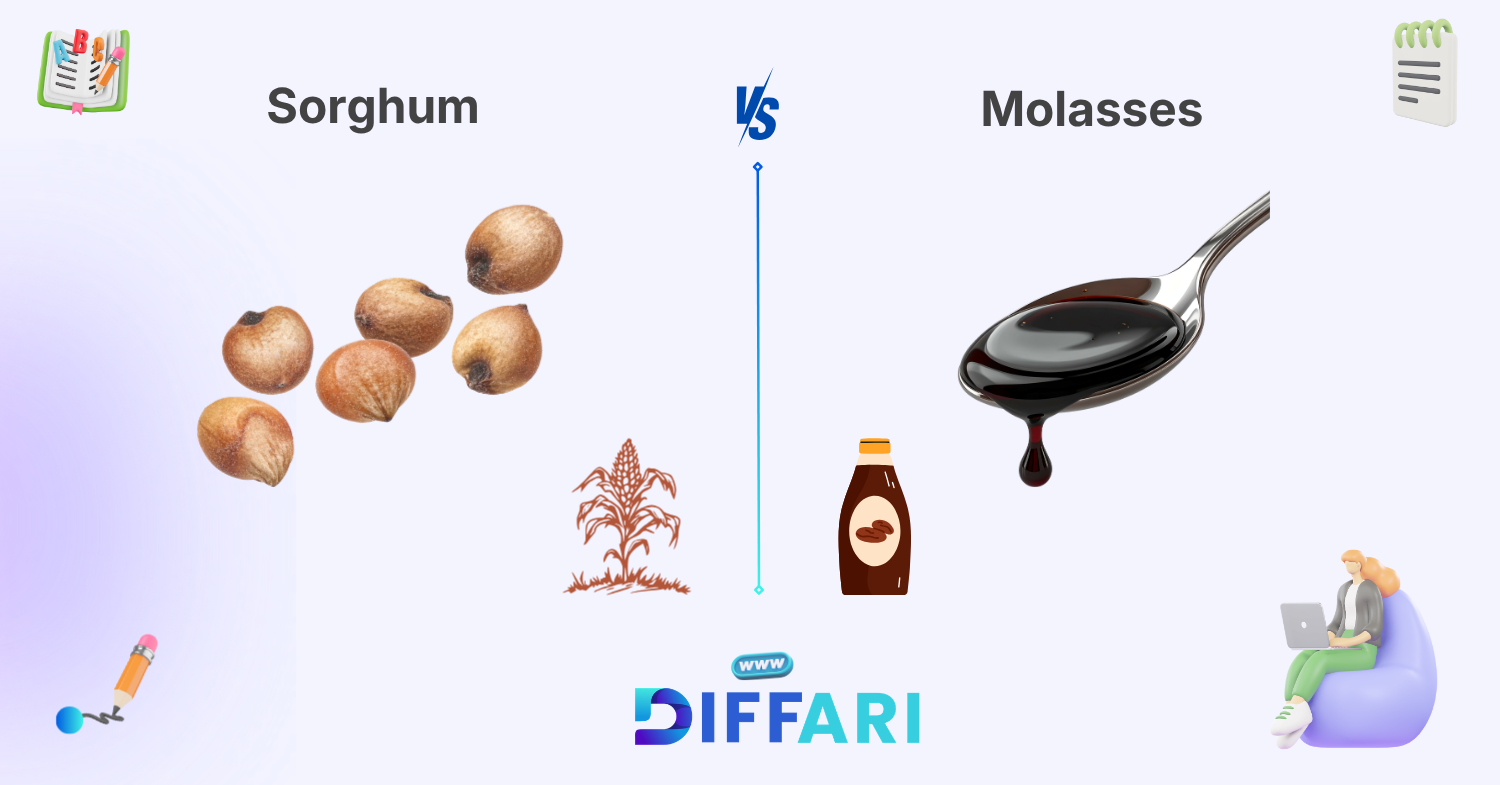

Difference between sorghum and molasses often confuses people when they see both sweeteners in stores or traditional recipes. Many assume they are the same, but they are quite different.
A home cook once tried to replace molasses with sorghum syrup in a baking recipe. The taste changed completely, and the texture became lighter and less bitter.
The difference between sorghum and molasses mainly comes from their source, taste, and production process. Both look similar, but they come from different plants and serve different purposes.
Understanding the difference between sorghum and molasses helps cooks, students, and food enthusiasts choose the right ingredient. Now let’s explore their key differences in a clear and simple way.
Key Difference Between the Two
The main difference between sorghum and molasses lies in their source and flavor.
Sorghum is a natural syrup made from sorghum cane juice, while molasses is a byproduct of sugar production from sugarcane or sugar beets.
Sorghum tastes lighter and sweeter. Molasses tastes stronger and slightly bitter.
Sorghum is often used in traditional Southern cooking, while molasses is common in baking and processed foods.
This basic comparison helps you quickly understand their unique roles in cooking and nutrition.
Why Is Their Difference Necessary to Know
Understanding the difference between sorghum and molasses helps people make better food choices. Many recipes depend on the correct sweetener for flavor and texture.
Students and learners benefit because they understand agricultural and food science concepts clearly. This knowledge improves academic and practical understanding of natural sweeteners.
Professionals in food, nutrition, and agriculture also need this knowledge. Chefs, dietitians, and food producers use the correct ingredient to maintain quality and taste.
Knowing their difference supports better health decisions and improves cooking results. Now, let’s look at how to pronounce these words correctly.
🔊 Pronunciation
Sorghum
US: /ˈsɔːrɡəm/
UK: /ˈsɔːɡəm/
Molasses
US: /məˈlæsɪz/
UK: /məˈlæsɪz/
Correct pronunciation helps learners speak confidently and understand food-related discussions more clearly. Now, let’s define both terms in simple language.
📚 Core Definitions
Sorghum
Sorghum is a thick, sweet syrup made from the juice of sorghum cane. Farmers extract the juice and boil it to create a natural sweetener.
It has a mild and earthy flavor and is often considered a traditional and natural product.
Example:
A farmer makes sorghum syrup from fresh sorghum cane.
Molasses
Molasses is a dark, thick syrup produced during sugar refining from sugarcane or sugar beets. It remains after sugar crystals are removed.
It has a strong, slightly bitter taste and is commonly used in baking and processed foods.
Example:
The baker added molasses to the gingerbread recipe.
📚 10 Clear Differences Between Sorghum and Molasses
1. Source of Production
Sorghum comes from sorghum cane plants. Farmers press the cane to extract juice and boil it into syrup.
Molasses comes from sugarcane or sugar beets during sugar production.
Example for Sorghum:
Farmers grow sorghum in warm climates.
Example for Molasses:
Sugar factories produce molasses during sugar refining.
2. Production Process
Sorghum is made by boiling sorghum juice slowly until it thickens.
Molasses forms after repeated sugar extraction and boiling.
Example for Sorghum:
Producers cook sorghum juice in open pans.
Example for Molasses:
Factories process sugarcane to create molasses.
3. Taste
Sorghum tastes mild, sweet, and slightly grassy.
Molasses tastes strong, rich, and slightly bitter.
Example for Sorghum:
Sorghum adds gentle sweetness to pancakes.
Example for Molasses:
Molasses gives gingerbread a deep flavor.
4. Color
Sorghum usually appears light brown or golden.
Molasses appears dark brown or black.
Example for Sorghum:
The syrup looks golden on biscuits.
Example for Molasses:
The molasses looks dark and thick.
5. Texture
Sorghum has a lighter and smoother texture.
Molasses is thicker and heavier.
Example for Sorghum:
Sorghum spreads easily on bread.
Example for Molasses:
Molasses pours slowly from the bottle.
6. Nutritional Content
Sorghum contains natural minerals and fewer additives.
Molasses contains iron, calcium, and strong nutrients.
Example for Sorghum:
People use sorghum as a natural sweetener.
Example for Molasses:
Molasses supports iron intake.
7. Culinary Uses
Sorghum is commonly used as a table syrup and natural sweetener in traditional cooking. People add it to pancakes, biscuits, and sauces.
Molasses is widely used in baking, processed foods, and industrial food production.
Example for Sorghum:
The chef poured sorghum over warm biscuits.
Example for Molasses:
The baker mixed molasses into the cake batter.
8. Agricultural Importance
Sorghum supports small farmers and local agriculture because it grows in dry climates and needs less water.
Molasses supports the sugar industry and large-scale food production.
Example for Sorghum:
Farmers grow sorghum in dry regions.
Example for Molasses:
Sugar companies produce molasses in large factories.
9. Health and Natural Value
Sorghum is often considered a natural and traditional sweetener with fewer processing steps.
Molasses is more processed but contains high mineral content like iron and calcium.
Example for Sorghum:
Health-conscious people prefer sorghum syrup.
Example for Molasses:
Doctors sometimes recommend molasses for iron intake.
10. Regional and Cultural Use
Sorghum is popular in Southern United States and some African and Asian regions.
Molasses is popular worldwide in baking and processed foods.
Example for Sorghum:
Southern families use sorghum in traditional recipes.
Example for Molasses:
Molasses is common in global baking.
🎯 Why Knowing the Difference Matters
Students need to understand the difference between sorghum and molasses to improve their knowledge of food science and agriculture. It helps them understand natural and processed sweeteners clearly.
Professionals such as chefs, dietitians, and food manufacturers rely on this difference to maintain flavor, nutrition, and product quality. Choosing the wrong ingredient can affect taste and consistency.
In daily life, people make better health and cooking decisions when they know which sweetener to use. This knowledge improves communication and practical understanding.
H3: Real‑World Consequences of Confusion
Using molasses instead of sorghum in traditional recipes can change flavor and texture. This may lead to poor cooking results.
In nutrition planning, confusion may affect dietary choices and mineral intake.
In food production, wrong ingredient selection can reduce product quality and customer satisfaction.
🧠 Why People Get Confused
Similar Appearance
Both sorghum and molasses look like dark syrup. Their color and texture create confusion.
Similar Usage
Both are used as sweeteners in cooking and baking. This overlap makes people think they are the same.
Agricultural Misunderstanding
Many people do not know that sorghum comes from sorghum cane and molasses comes from sugar production.
Informal Communication
In casual speech, people use the terms interchangeably, which increases confusion.
🎭 Connotation & Emotional Tone
Connotation = the emotional meaning attached to a word.
In food terms, connotation relates to how people emotionally perceive the ingredient.
Sorghum
Positive:
Sorghum is often seen as natural, traditional, and farm-friendly.
Example:
People see sorghum as a healthy natural syrup.
Negative:
Some people think sorghum is old-fashioned or less refined.
Example:
Some buyers believe sorghum is outdated.
Neutral:
Sorghum is simply a plant-based sweetener.
Example:
Farmers produce sorghum syrup.
Molasses
Positive:
Molasses is seen as rich in minerals and useful in baking.
Example:
Bakers value molasses for strong flavor.
Negative:
Some people see molasses as too bitter or heavily processed.
Example:
Some consumers avoid molasses due to bitterness.
Neutral:
Molasses is a sugar industry byproduct.
Example:
Factories produce molasses during sugar refining.
🗣 Usage in Metaphors, Similes & Idioms
Molasses appears in common English expressions.
Common Idioms
“Slow as molasses”
Meaning: very slow movement.
Example:
Traffic moved slow as molasses in the morning.
“Thick as molasses”
Meaning: very thick or dense.
Example:
The syrup was thick as molasses.
Sorghum has fewer idioms but appears in agricultural and cultural references.
Example:
Farmers say sorghum is the backbone of dry farming.
📊 Comparison Table
| Feature | Sorghum | Molasses |
|---|---|---|
| Meaning | Natural syrup from sorghum cane | Byproduct of sugar production |
| Tone | Natural and traditional | Strong and industrial |
| Usage | Table syrup and cooking | Baking and processed foods |
| Context | Farming and traditional food | Sugar industry and baking |
| Formality | Agricultural and culinary | Industrial and culinary |
⚖️ Which Is Better in What Situation?
H3: When to Use Sorghum
Use sorghum when you want a mild and natural sweetener. It works well in traditional recipes and simple cooking. It also suits natural diets and farm-based foods.
H3: When to Use Molasses
Use molasses in baking and strong-flavor recipes. It is ideal for gingerbread, sauces, and processed food production. It adds deep color and richness.
H3: Situational Clarity
Choose sorghum for natural sweetness and traditional cooking. Choose molasses for strong flavor and industrial baking.
H3: Contextual Correctness
Use sorghum in agricultural or traditional food contexts. Use molasses in baking and sugar industry contexts.
📖 Literary or Cultural References
Book Reference
“The Southern Foodways Alliance Guide to Sorghum” (Food Culture, Various Authors, 2013)
This book discusses the cultural importance of sorghum in Southern farming.
Movie Reference
“King Corn” (USA, 2007)
The documentary discusses agricultural sweeteners and farming systems, indirectly touching sugar production and molasses.
❓ FAQs
1. Is sorghum the same as molasses?
No, sorghum and molasses are different. Sorghum comes from sorghum cane, while molasses comes from sugar production. They differ in taste and processing.
2. Which is healthier, sorghum or molasses?
Both have benefits. Sorghum is more natural and less processed, while molasses contains more minerals like iron and calcium.
3. Can sorghum replace molasses in recipes?
Yes, but the taste will change. Sorghum is lighter and less bitter than molasses, so the flavor becomes milder.
4. Why is molasses darker than sorghum?
Molasses becomes darker because of repeated boiling during sugar refining. Sorghum is boiled only once, so it stays lighter.
5. Is sorghum widely used worldwide?
Sorghum is used mainly in the Southern United States, Africa, and Asia. Molasses is more common worldwide.
🏁 Conclusion
The difference between sorghum and molasses mainly lies in their source, taste, and production process. Sorghum comes from sorghum cane and offers mild sweetness, while molasses comes from sugar production and provides a strong flavor.
Understanding this difference helps cooks, students, and professionals make better food and nutrition decisions. It improves cooking results and prevents confusion in recipes and communication.
Both sorghum and molasses play important roles in agriculture and food culture. Each has unique benefits and uses in different situations.
Keep exploring food knowledge and ingredient differences to build stronger understanding and smarter cooking choices in everyday life 🌾

Sajid Ali is an English language educator and content specialist with 7+ years of teaching experience. He holds master’s degrees in Information Technology and Education from the Virtual University of Pakistan and writes SEO-optimized, learner-friendly vocabulary content for diffari.com.