

Difference between oa and ra often becomes confusing when a doctor mentions arthritis during a medical visit. Many people hear these terms and assume they mean the same condition, which creates unnecessary worry and misunderstanding.
In simple terms, OA stands for osteoarthritis and RA stands for rheumatoid arthritis. Both affect joints and cause pain, but their causes and effects are very different. Understanding the difference between oa and ra helps patients, students, and caregivers make better health decisions.
Many learners search for the difference between oa and ra because these terms appear in medical reports, health articles, and doctor consultations. Without clear knowledge, it is easy to mix them up or misunderstand their severity.
This guide explains the difference in a simple and structured way so you can clearly understand how these two conditions work and why their distinction matters in real life.
Key Difference Between the Two
The main difference between OA and RA lies in their cause and nature.
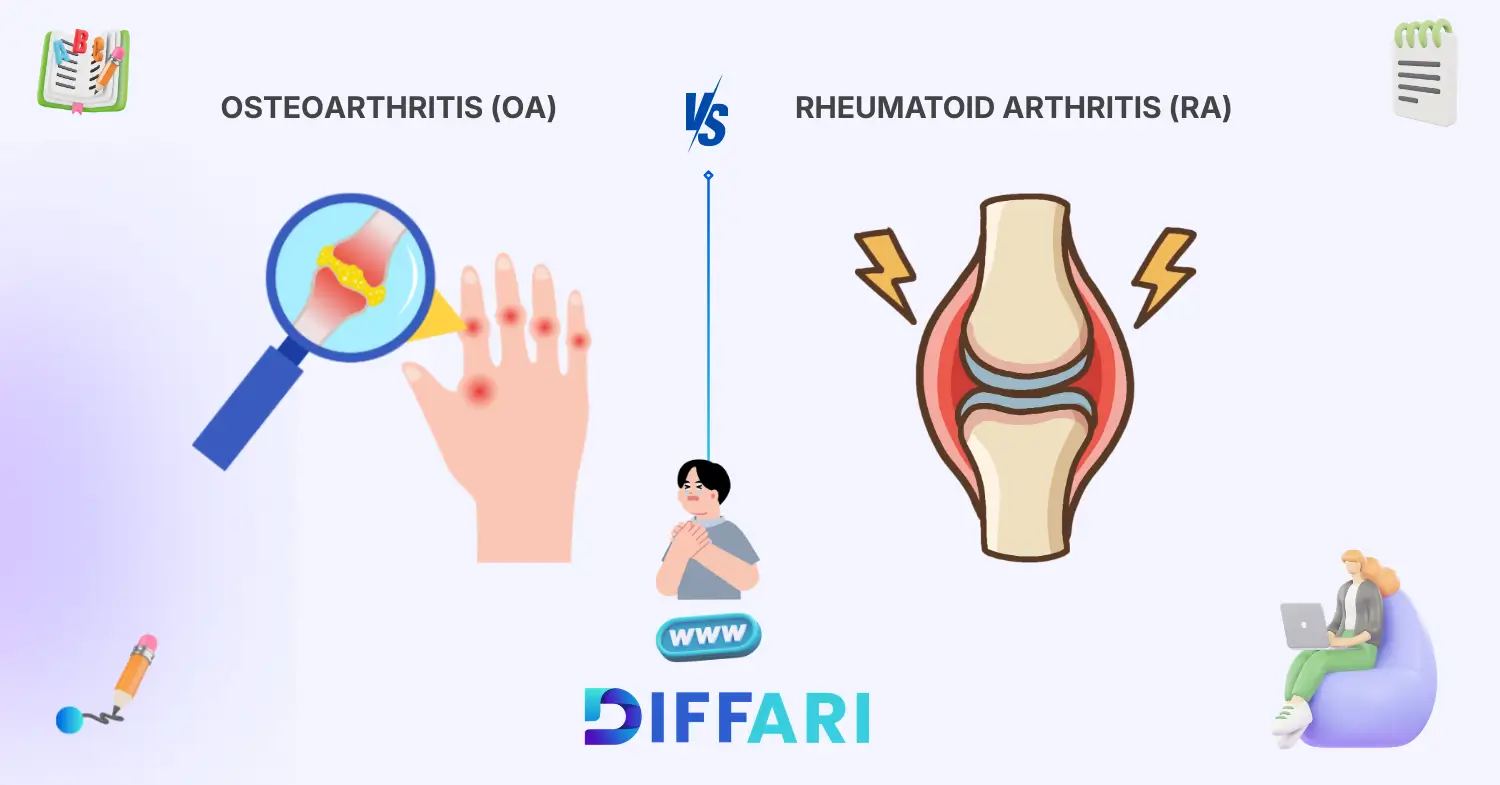
Osteoarthritis (OA) is a degenerative joint disease. It happens when cartilage wears down over time due to aging or physical stress. The damage develops slowly and mainly affects joints like knees, hips, and hands.
Rheumatoid arthritis (RA) is an autoimmune disease. The immune system attacks healthy joints by mistake. This causes inflammation, swelling, and long-term joint damage.
In simple words, OA is caused by wear and tear, while RA is caused by immune system problems.
Understanding this key difference helps learners quickly separate these two conditions before studying deeper details.
Why Is Their Difference Necessary to Know
Knowing the difference between OA and RA helps people understand their health conditions clearly. When patients know which type of arthritis they have, they follow the right treatment and lifestyle plan.
For learners and medical students, this difference builds strong foundational knowledge. It helps them understand disease classification, treatment methods, and patient care responsibilities in a structured way.
For society, awareness of OA and RA reduces confusion and fear. People can seek early medical advice and avoid spreading incorrect health information. Clear understanding leads to better communication between doctors and patients.
Now, let us explore how these two terms sound and are pronounced in English.
Pronunciation
OA
US: /ˌoʊˈeɪ/
UK: /ˌəʊˈeɪ/
RA
US: /ˌɑːrˈeɪ/
UK: /ˌɑːˈeɪ/
Both abbreviations are spoken letter by letter in English. Understanding pronunciation helps in medical communication and professional discussions.
Now, let us look at their core definitions for deeper clarity.
Core Definitions
OA
Osteoarthritis is a joint condition where cartilage breaks down over time. It usually develops with age or repeated physical activity. The tone is neutral and medical because it describes a physical condition.
Example:
The doctor diagnosed OA in her knee after an X-ray.
RA
Rheumatoid arthritis is an autoimmune disease where the body attacks its own joints. It causes inflammation, swelling, and stiffness. The tone often feels serious because it involves the immune system.
Example:
He started treatment after doctors confirmed RA.
10 Clear Differences Between OA and RA
1. Emotional Intensity
OA usually creates mild concern because it develops slowly and is common in aging. RA often creates more worry because it is an autoimmune disease.
Example for OA:
The doctor said OA is manageable with exercise.
Example for RA:
The doctor explained that RA needs long-term treatment.
2. Duration
OA develops gradually over many years. RA can appear suddenly and worsen quickly.
Example for OA:
Her knee pain increased slowly over time.
Example for RA:
His joint swelling appeared within a few months.
3. Focus
OA focuses on cartilage damage in joints. RA focuses on immune system inflammation.
Example for OA:
The scan showed cartilage loss in the knee.
Example for RA:
Blood tests confirmed immune system activity.
4. Severity
OA is usually less severe in early stages. RA can become severe if untreated.
Example for OA:
He continued normal activities with mild pain.
Example for RA:
She needed medication to control inflammation.
5. Rationality
OA has a clear physical cause like aging or stress. RA has a complex immune cause.
Example for OA:
Years of running caused knee damage.
Example for RA:
The immune system attacked joint tissues.
6. Formality
OA appears more in general medical discussions. RA appears in specialist and clinical discussions.
Example for OA:
General doctors often treat OA cases.
Example for RA:
Rheumatologists handle RA cases.
7. Context of Use
OA appears in aging and lifestyle discussions. RA appears in autoimmune disease discussions.
Example for OA:
Exercise helps manage OA.
Example for RA:
Medication controls RA symptoms.
8. Psychological Impact
OA causes moderate stress. RA may cause emotional anxiety due to chronic nature.
Example for OA:
She stayed calm after diagnosis.
Example for RA:
He felt worried about long-term treatment.
9. Tone
OA sounds neutral and common. RA sounds serious and medical.
Example for OA:
Many older adults develop OA.
Example for RA:
RA requires careful monitoring.
10. Expression Style
OA is often explained simply. RA requires detailed explanation.
Example for OA:
It is joint wear and tear.
Example for RA:
It is an autoimmune inflammatory disease.
Why Knowing the Difference Matters
Students must know the difference between OA and RA to build accurate medical vocabulary. Clear understanding improves learning and exam performance.
Professionals must know the difference to communicate correctly with patients and colleagues. Accurate terminology prevents medical errors and misunderstandings.
Society benefits from awareness because people can seek early treatment and avoid panic.
Real-world consequences of confusion
Confusing OA with RA may lead to wrong treatment choices. A patient might ignore serious symptoms or follow incorrect advice. Clear knowledge prevents such risks and improves healthcare communication.
Why People Get Confused
Similar Spelling or Pronunciation
Both OA and RA are short abbreviations. Their sound is similar, which creates confusion.
Semantic Overlap
Both conditions affect joints and cause pain. This similarity makes people think they are the same.
Context-Based Usage
Doctors sometimes use abbreviations quickly in reports. Patients may not understand the difference.
Influence of Informal Speech
In everyday talk, people call both conditions simply arthritis. This increases confusion.
Connotation & Emotional Tone
Connotation = the emotional meaning attached to a word.
OA
Positive:
Manageable and common condition.
Example: OA can be controlled with exercise.
Negative:
Joint pain and stiffness.
Example: OA causes discomfort in knees.
Neutral:
Medical diagnosis term.
Example: OA affects cartilage.
RA
Positive:
Treatable with modern medicine.
Example: RA symptoms improve with therapy.
Negative:
Chronic autoimmune disease.
Example: RA causes joint swelling.
Neutral:
Medical classification term.
Example: RA is an autoimmune disorder.
Usage in Metaphors, Similes & Idioms
Medical terms rarely appear in idioms, but they can appear in metaphorical expressions.
Example sentences:
- His joints felt like OA was slowly wearing them down.
- Her immune system attacked like RA in a silent battle.
These metaphors help explain medical conditions in simple language.
Comparison Table
| Feature | OA | RA |
|---|---|---|
| Meaning | Wear and tear arthritis | Autoimmune arthritis |
| Tone | Neutral | Serious |
| Usage | Aging and joint health | Immune system disease |
| Context | General medical | Specialist medical |
| Formality | Moderate | High |
Which Is Better in What Situation?
When to Use OA
Use OA when discussing aging, joint wear, or cartilage damage. It fits general medical and health conversations. Doctors often use it in routine diagnosis and treatment discussions.
When to Use RA
Use RA when discussing autoimmune diseases and inflammation. It suits clinical and specialist contexts. Medical professionals use it in detailed reports and treatment plans.
Situational Clarity
Choose OA for physical joint damage situations and RA for immune-related joint problems.
Contextual Correctness
Correct usage depends on medical context and diagnosis. Using the right term improves clarity and communication.
Literary or Cultural References
Book:
The Arthritis Handbook (Health Guide, Dr. Grant Cooper, 2012) discusses OA and RA in simple medical language.
Movie:
Still Alice (USA, 2014) highlights chronic illness awareness and medical understanding, similar to discussions about RA and OA in healthcare communication.
These references show how medical conditions are explained in public education and media.
FAQs
1. Is OA more common than RA?
Yes, OA is more common than RA. Many older adults develop OA due to aging and joint stress. RA is less common but more serious. It affects the immune system and requires long-term treatment. Both conditions need medical attention.
2. Can OA turn into RA?
No, OA does not turn into RA. They are completely different diseases. OA is caused by wear and tear, while RA is caused by immune system problems. A person can have both conditions, but one does not change into the other.
3. Which is more painful, OA or RA?
RA is usually more painful because it involves inflammation and swelling. OA pain develops slowly and may be mild in early stages. RA pain can be intense and affect multiple joints. Proper treatment reduces pain in both conditions.
4. Can young people get OA or RA?
Young people can get RA more often than OA. RA can start in early adulthood. OA usually appears in older adults due to aging and joint stress. However, injuries can cause OA in younger people.
5. How do doctors diagnose OA and RA?
Doctors use X-rays, blood tests, and physical exams. OA appears in joint scans, while RA appears in blood tests and inflammation markers. Medical history also helps doctors identify the condition. Early diagnosis improves treatment outcomes.
Conclusion
Understanding the difference between OA and RA helps people make informed health decisions and communicate clearly with medical professionals. Both conditions affect joints, but their causes and treatment approaches are very different.
OA develops due to wear and tear, while RA develops due to immune system problems. This core distinction makes proper diagnosis and treatment essential for long-term health and comfort.
Clear knowledge reduces confusion, improves awareness, and supports better communication between patients, students, and healthcare experts. Accurate understanding also helps avoid fear and misinformation.
Keep learning medical terms step by step, and always use the correct terminology in discussions, studies, and real-life situations to build confident and responsible health awareness 🧠

Sajid Ali is an English language educator and content specialist with 7+ years of teaching experience. He holds master’s degrees in Information Technology and Education from the Virtual University of Pakistan and writes SEO-optimized, learner-friendly vocabulary content for diffari.com.