
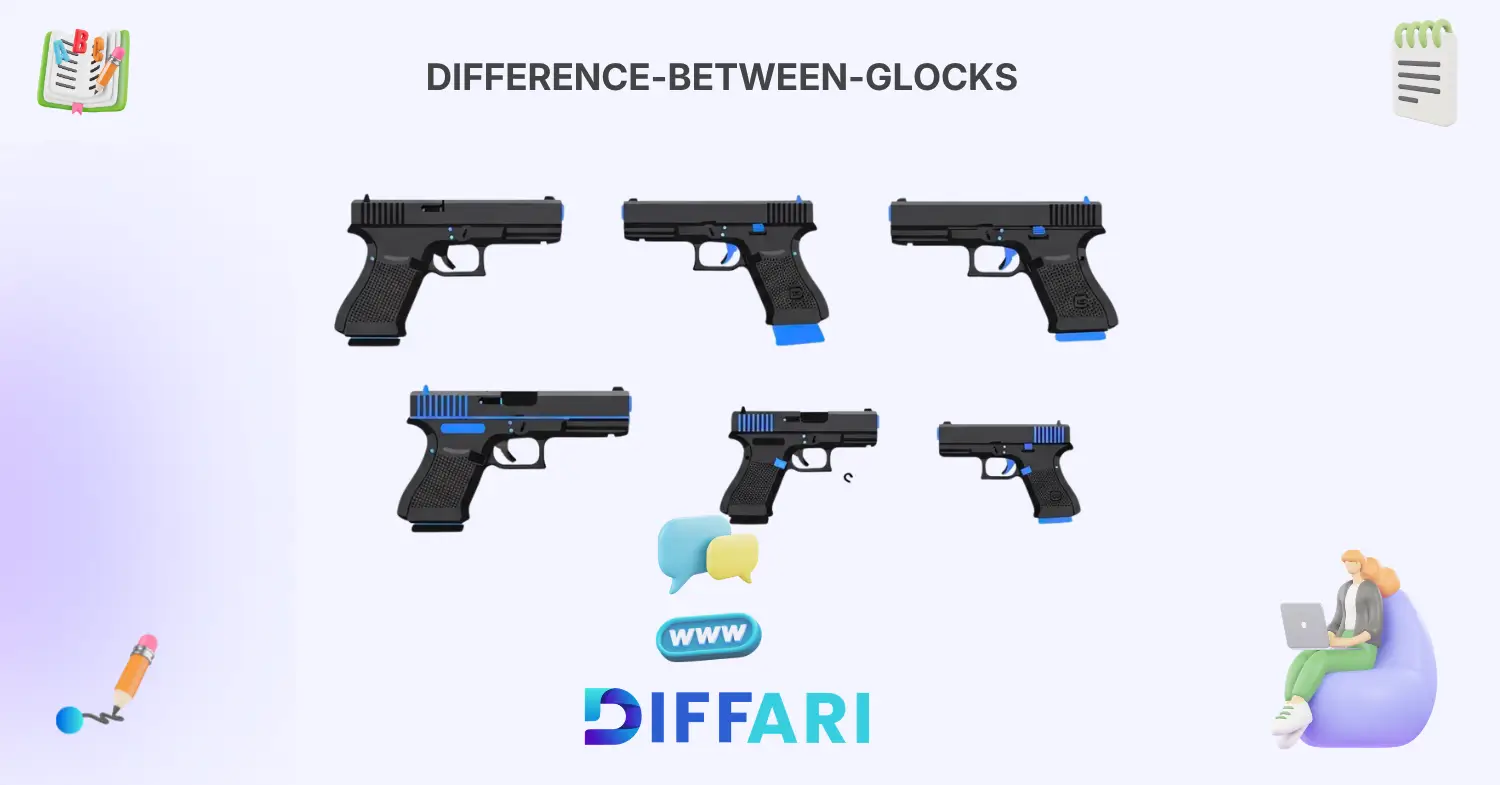

Difference between glocks often becomes confusing when people see many models with similar names like Glock 17, Glock 19, and Glock 26. Imagine walking into a store or reading an online guide and finding dozens of Glock numbers. You may wonder why they look similar but carry different names.
The difference between glocks mainly relates to size, capacity, purpose, and design features. Some models are full‑size, some are compact, and others are made for easy carrying. Even though they come from the same brand, their use and comfort vary.
Many beginners search for the difference between glocks because they want a simple explanation without technical jargon. Students, researchers, and firearm enthusiasts also want a clear and educational understanding.
In this guide, we will explore the key differences between Glock models in a simple and structured way to make everything easy to understand.
Key Difference Between the Two
The main difference between Glock models lies in their size, magazine capacity, intended use, and handling comfort.
Full‑size Glock models focus on stability and higher capacity. Compact and subcompact models focus on portability and ease of carrying. Each model serves a specific purpose.
For example, larger models provide better control, while smaller ones offer convenience and mobility. This distinction helps users choose the right model for their needs.
Understanding these differences leads us to why this knowledge is important in real‑world situations.
Why Is Their Difference Necessary to Know
Knowing the difference between Glock models helps learners understand how design affects performance and usability.
Students and researchers benefit because they can clearly distinguish between firearm terminology and model classification. This improves academic and linguistic accuracy.
Professionals such as security analysts, journalists, and law students need this knowledge to avoid confusion in reports and discussions. Clear understanding supports responsible communication in society.
Overall, knowing the difference helps people speak accurately and understand context correctly before moving into pronunciation and definitions.
🔊 Pronunciation
H3: Glock
US: /ɡlɑːk/
UK: /ɡlɒk/
H3: Glocks
US: /ɡlɑːks/
UK: /ɡlɒks/
Now that pronunciation is clear, we can move toward core definitions and basic understanding.
📚 Core Definitions
H3: Full‑Size Glock Models
Full‑size Glock models are larger handguns designed for stability, accuracy, and higher magazine capacity. They are often used for duty, training, and professional environments. The tone is technical and practical.
Example:
Example: The Glock 17 is a full‑size model commonly used in training programs.
H3: Compact/Subcompact Glock Models
Compact and subcompact Glock models are smaller and lighter. They focus on portability and easy handling. The tone is practical and user‑friendly.
Example:
Example: The Glock 19 is a compact model that balances size and performance.
📚 10 Clear Differences Between Glock Models
1. Size
Full‑size models are larger and heavier. Compact models are smaller and lighter.
Example for Full‑Size: Glock 17 provides a longer grip.
Example for Compact: Glock 19 offers a shorter frame.
2. Magazine Capacity
Full‑size models hold more rounds. Compact models hold fewer rounds.
Example for Full‑Size: Glock 17 holds more ammunition.
Example for Compact: Glock 26 holds fewer rounds.
3. Portability
Compact models are easier to carry. Full‑size models are harder to conceal.
Example for Full‑Size: Duty officers use larger models.
Example for Compact: Civilians prefer compact versions.
4. Grip Comfort
Full‑size models offer better grip space. Compact models have tighter grip areas.
Example for Full‑Size: Easier hand positioning.
Example for Compact: Smaller grip for mobility.
5. Accuracy
Larger models often provide better accuracy due to longer barrels. Smaller models prioritize convenience.
Example for Full‑Size: Longer sight radius improves aiming.
Example for Compact: Shorter barrel reduces range stability.
6. Intended Use
Full‑size models suit professional duty. Compact models suit personal carry.
Example for Full‑Size: Training and official use.
Example for Compact: Everyday portability.
7. Weight
Full‑size models are heavier. Compact models are lighter.
Example for Full‑Size: Stable shooting experience.
Example for Compact: Easy movement.
8. Handling
Full‑size models feel stable. Compact models feel flexible.
Example for Full‑Size: Balanced handling.
Example for Compact: Quick response.
9. Design Focus
Full‑size models focus on performance. Compact models focus on practicality.
Example for Full‑Size: Professional environment use.
Example for Compact: Casual handling.
10. User Preference
Full‑size models attract professionals. Compact models attract general users.
Example for Full‑Size: Training institutions prefer them.
Example for Compact: Individual users choose them.
🎯 Why Knowing the Difference Matters
Students must know the difference to understand firearm terminology clearly. It helps them avoid confusion in reading and writing.
Professionals must understand these differences to communicate accurately in reports and discussions. Clear knowledge supports responsible language use.
Socially, misunderstanding Glock models can lead to incorrect assumptions or communication errors in media and public discussions.
H3: Real‑World Consequences of Confusion
Confusing Glock models may lead to incorrect reporting or misunderstanding in legal and educational contexts. Accurate terminology ensures clarity and responsible communication.
🧠 Why People Get Confused
Similar Naming
Most Glock models use numbers, which makes them look similar and confusing.
Semantic Overlap
All models belong to the same brand, so people assume they are identical.
Context‑Based Usage
Different environments use different models, creating confusion in meaning.
Informal Speech
People often say “Glock” without specifying the model, which creates misunderstanding.
🎭 Connotation & Emotional Tone
Connotation = emotional meaning attached to a word.
Connotation (bold) = the emotional meaning associated with a word.
For Full‑Size Glock Models
Positive: Reliable and professional (Example: Used in official training)
Negative: Bulky or heavy (Example: Hard to carry daily)
Neutral: Standard firearm model (Example: Listed in technical reports)
For Compact Glock Models
Positive: Portable and convenient (Example: Easy to handle)
Negative: Smaller capacity (Example: Limited ammunition)
Neutral: Practical handgun (Example: Used in general discussions)
🗣 Usage in Metaphors, Similes & Idioms
While Glock models are technical terms, they sometimes appear in comparisons.
Example Sentence:
He handled the situation like a compact glock—quick and efficient.
Example Sentence:
The system worked like a full‑size glock—stable and reliable.
These comparisons show symbolic usage in communication.
📊 Comparison Table
| Feature | Full‑Size Glock Models | Compact Glock Models |
|---|---|---|
| Meaning | Larger professional models | Smaller portable models |
| Tone | Technical and stable | Practical and flexible |
| Usage | Duty and training | Personal and general use |
| Context | Professional environments | Everyday discussions |
| Formality | More formal | Less formal |
⚖️ Which Is Better in What Situation?
When to Use Full‑Size Glock Models
Use full‑size Glock models in professional or training discussions. They fit situations where stability and performance matter.
When to Use Compact Glock Models
Use compact models in general or educational discussions about portability and convenience.
Situational Clarity
Choose based on context. Larger models suit technical explanation, while compact models suit practical examples.
Contextual Correctness
Correct usage ensures clarity in academic and professional communication.
📖 Literary or Cultural References
Book: Glock: The Rise of America’s Gun (Nonfiction, Paul M. Barrett, 2012)
This book explores the history and impact of Glock models.
Movie: John Wick (USA, 2014)
Glock models appear in action scenes, showing their cultural presence.
❓ FAQs
1. What does the difference between glocks mean?
It refers to variations in size, design, and purpose among Glock models. Each model serves a specific function. Some focus on performance, while others focus on portability. Understanding this helps in clear communication. It also improves technical knowledge.
2. Are all Glock models the same?
No, they differ in size, capacity, and design. Each model has unique features. Some are larger and more stable. Others are smaller and easier to carry. This makes them suitable for different situations.
3. Why are Glock models numbered?
Numbers help identify specific designs and features. They make classification easier. Users can quickly recognize model differences. This system improves organization and clarity.
4. Which Glock model is most common?
Compact models are often widely discussed because they balance size and performance. Full‑size models are also common in professional environments. The popularity depends on usage and context. Both categories remain important.
5. Is it important to understand Glock differences?
Yes, it improves communication and knowledge. Students, professionals, and researchers benefit from clear understanding. Accurate terminology prevents confusion. It also supports responsible discussions.
🏁 Conclusion
The difference between glocks mainly depends on size, capacity, design, and intended use. Full‑size models focus on stability and performance, while compact models emphasize portability and convenience. Understanding these distinctions helps readers communicate clearly and accurately.
Clear knowledge supports students in learning terminology and helps professionals present accurate information in discussions and reports. It also prevents confusion in social and academic contexts.
In simple terms, knowing Glock model differences builds clarity, improves understanding, and strengthens responsible communication. Keep learning, stay curious, and always focus on accurate and informed language use.

Sajid Ali is an English language educator and content specialist with 7+ years of teaching experience. He holds master’s degrees in Information Technology and Education from the Virtual University of Pakistan and writes SEO-optimized, learner-friendly vocabulary content for diffari.com.