
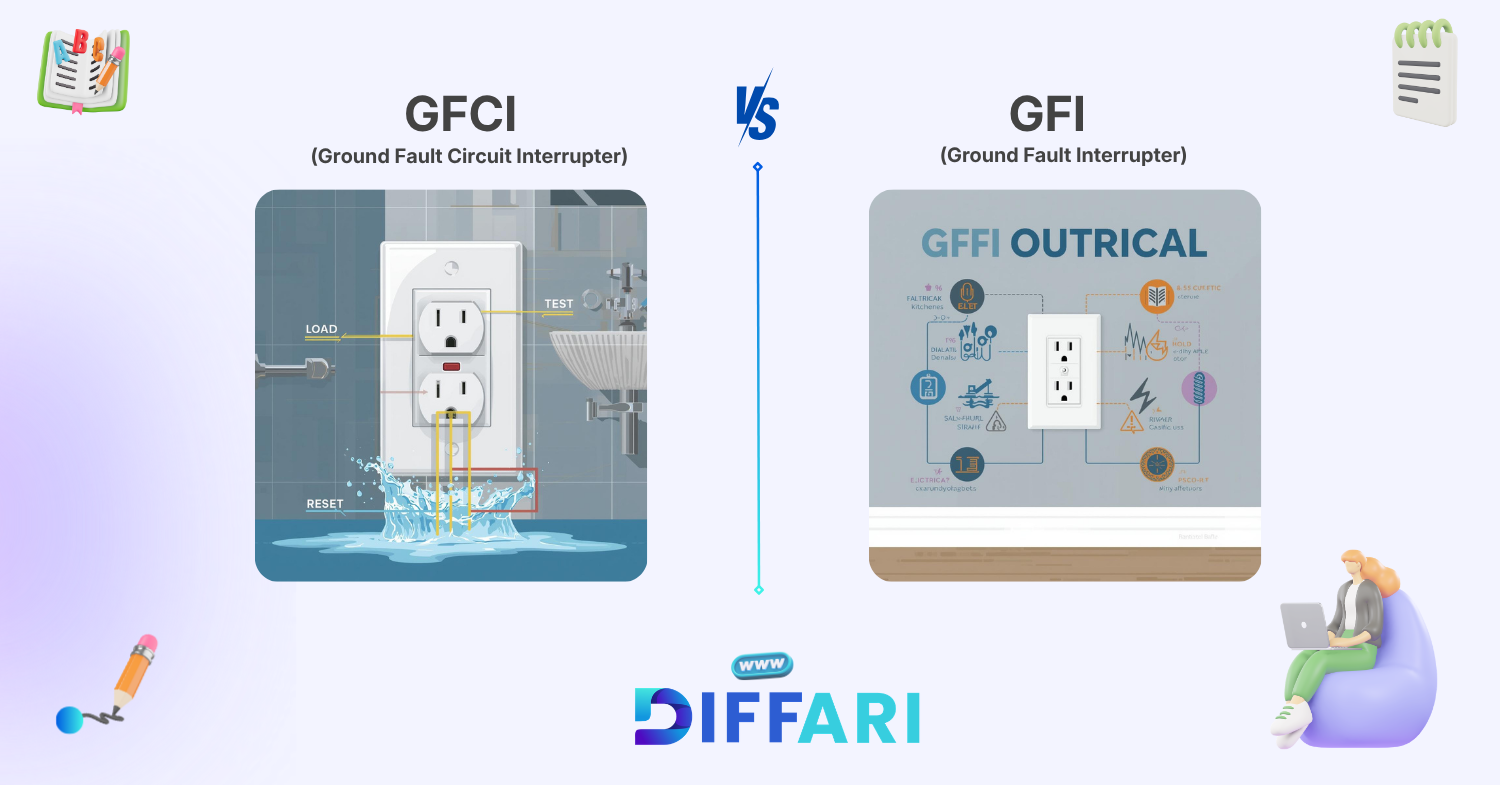

Difference between GFCI and GFI is a common question among homeowners, electricians, and students learning about electrical safety. Many people see these terms on outlets and circuit breakers but do not understand what they really mean.
A homeowner once tried to replace a bathroom outlet and saw the label GFCI on the device while the manual mentioned GFI. This created confusion because both seemed different, even though they looked similar.
The difference between GFCI and GFI is actually very small because both terms refer to electrical safety devices designed to prevent electric shock. In most cases, they serve the same purpose in protecting people from electrical hazards.
Understanding the difference between GFCI and GFI helps homeowners, students, and professionals make safe and informed electrical decisions. Now, let’s explore the key difference between the two.
Key Difference Between the Two
The main difference between gfci and gfi lies in terminology rather than function.
GFCI stands for Ground Fault Circuit Interrupter, which is the official technical term used in electrical codes and standards. It refers to a device that shuts off power when it detects a ground fault.
GFI stands for Ground Fault Interrupter, which is a shorter and more informal version of the same term. Many manufacturers and users use GFI to refer to GFCI devices.
In simple terms, GFCI is the official name, while GFI is an alternative or shortened name for the same safety device.
This distinction helps learners understand that both terms usually refer to the same electrical protection technology.
Why Is Their Difference Necessary to Know
Understanding the difference between gfci and gfi helps homeowners and students avoid confusion when reading electrical manuals or buying outlets. Clear knowledge improves safety and correct installation.
Electricians and professionals need this distinction to communicate accurately in technical environments and follow electrical codes properly. Using the correct term helps maintain professional clarity.
In society, proper knowledge of electrical safety devices reduces accidents and improves home and workplace protection. Awareness of these terms supports safer electrical systems and responsible usage.
Now, let’s learn how to pronounce these terms correctly.
🔊 Pronunciation
GFCI
US: /ˌdʒiː ɛf siː ˈaɪ/
UK: /ˌdʒiː ɛf siː ˈaɪ/
GFI
US: /ˌdʒiː ɛf ˈaɪ/
UK: /ˌdʒiː ɛf ˈaɪ/
Correct pronunciation helps electricians, students, and homeowners communicate clearly in discussions about electrical safety. Now, let’s define both terms in simple language.
📚 Core Definitions
GFCI
GFCI is an electrical safety device that protects people from electric shock by shutting off power when a ground fault is detected. It is commonly used in bathrooms, kitchens, and outdoor outlets.
It carries a technical and professional tone because electrical standards and codes use this term.
Example:
A GFCI outlet protects users in wet areas.
GFI
GFI is a shorter and informal term for a ground fault protection device. It refers to the same safety function as GFCI but is used in casual or simplified communication.
It carries a simpler and conversational tone.
Example:
The electrician installed a GFI outlet in the kitchen.
📚 10 Clear Differences Between GFCI and GFI
1. Official Terminology
GFCI is the official technical term used in electrical codes and standards. It appears in manuals, regulations, and engineering documents.
GFI is an informal or shortened version used in everyday conversation and product labeling.
Example for GFCI:
The building code requires GFCI outlets in bathrooms.
Example for GFI:
The electrician suggested installing a GFI outlet.
2. Technical Accuracy
GFCI provides more technical accuracy because it fully describes the circuit interrupter function.
GFI is less precise because it removes the word “circuit” from the name.
Example for GFCI:
The engineer used GFCI in the technical report.
Example for GFI:
The homeowner used GFI in casual conversation.
3. Usage in Electrical Codes
GFCI is widely used in national electrical codes and safety regulations.
GFI rarely appears in official electrical documentation.
Example for GFCI:
The National Electrical Code requires GFCI protection.
Example for GFI:
The product box labeled it as GFI.
4. Professional Communication
GFCI is preferred in professional and technical communication.
GFI is commonly used in informal communication.
Example for GFCI:
The electrician discussed GFCI installation.
Example for GFI:
The homeowner asked about GFI outlets.
5. Clarity in Meaning
GFCI clearly indicates a circuit interrupter device.
GFI gives a general idea of ground fault protection but lacks technical detail.
Example for GFCI:
The manual explained GFCI protection.
Example for GFI:
The user understood basic GFI safety.
6. Industry Preference
GFCI is the preferred term in the electrical and engineering industry because it follows official terminology and standards. Professionals use it in reports, manuals, and technical discussions.
GFI is more common in everyday language and retail environments where simplicity matters.
Example for GFCI:
The electrical engineer specified GFCI outlets in the building plan.
Example for GFI:
The store label showed GFI protection on the outlet.
7. Context of Use
GFCI appears in construction documents, electrical codes, and safety guidelines. It is used in structured and regulated environments.
GFI appears in product packaging, conversations, and simplified instructions.
Example for GFCI:
The contractor followed GFCI installation rules.
Example for GFI:
The product description mentioned GFI outlet.
8. Psychological Impact
GFCI creates a sense of strong safety and professional reliability because it sounds technical and official.
GFI feels easier and more approachable because it is shorter and simpler.
Example for GFCI:
The safety manual recommended GFCI protection for wet areas.
Example for GFI:
The homeowner felt comfortable installing a GFI outlet.
9. Tone
GFCI carries a formal and technical tone suitable for engineering and safety discussions.
GFI carries a casual and simplified tone suitable for general users.
Example for GFCI:
The technician explained GFCI functionality.
Example for GFI:
The shop assistant explained GFI usage.
10. Expression Style
GFCI is expressed in professional electrical language and documentation.
GFI is expressed in everyday and simplified communication.
Example for GFCI:
The installation guide explained GFCI protection steps.
Example for GFI:
The homeowner asked about GFI outlets.
🎯 Why Knowing the Difference Matters
Understanding the difference between gfci and gfi helps students and homeowners improve their electrical safety knowledge. Clear understanding reduces confusion when reading manuals or installing outlets ⚡
Professionals and electricians must know this difference to communicate accurately in technical environments. Using the correct term ensures compliance with safety codes and regulations.
In society, proper awareness of electrical safety devices helps prevent accidents, electric shocks, and fire hazards. Clear terminology supports safer homes and workplaces.
Real‑World Consequences of Confusion
Confusing GFCI and GFI can lead to misunderstanding during installation or maintenance. A homeowner might think they are different devices and buy the wrong product.
This confusion may delay repairs or cause incorrect installation decisions.
Clear knowledge ensures safe and efficient electrical work.
🧠 Why People Get Confused
Similar Spelling
GFCI and GFI look almost the same in writing. The extra letter “C” makes a small difference, which many people overlook.
Semantic Overlap
Both terms refer to the same ground fault protection device. This overlap naturally creates confusion.
Context‑Based Usage
Manufacturers, electricians, and retailers use both terms interchangeably, which makes learners think they are different.
Influence of Informal Speech
In everyday language, people shorten technical terms for convenience. This leads to the widespread use of GFI instead of GFCI.
🎭 Connotation & Emotional Tone
Connotation = emotional meaning attached to a word.
Connotation (bold) = the emotional meaning associated with a word.
GFCI
Positive:
Represents safety, protection, and professional electrical standards.
Example: GFCI outlets protect families from electric shock.
Negative:
May sound complex or technical to beginners.
Example: GFCI installation seems complicated.
Neutral:
Refers to a ground fault protection device.
Example: The building includes GFCI outlets.
GFI
Positive:
Represents simple and easy-to-understand safety protection.
Example: GFI outlets improve home safety.
Negative:
May appear less technical or less precise.
Example: GFI sounds informal in professional reports.
Neutral:
Refers to a ground fault protection device.
Example: The electrician installed GFI protection.
🗣 Usage in Metaphors, Similes & Idioms (If Applicable)
GFCI and GFI are technical terms, so traditional idioms do not exist. However, simple metaphors help explain them.
Examples:
- GFCI works like a safety guard that shuts off electricity instantly.
- GFI acts like a quick alarm for electrical danger.
These metaphors help learners understand their protective function.
📊 Comparison Table
| Feature | GFCI | GFI |
|---|---|---|
| Meaning | Ground Fault Circuit Interrupter | Ground Fault Interrupter |
| Tone | Technical and formal | Simple and informal |
| Usage | Electrical codes and professional documents | Everyday conversation and labels |
| Context | Engineering and safety regulations | Retail and general communication |
| Formality | Highly formal | Moderately informal |
⚖️ Which Is Better in What Situation?
When to Use GFCI
Use GFCI in technical writing, electrical documentation, and professional communication. It is the correct term in engineering, construction, and safety regulations. Electricians and engineers prefer GFCI for clarity and accuracy.
When to Use GFI
Use GFI in casual conversation or simple explanations with homeowners and beginners. It makes communication easier and more understandable. Retailers and non-technical users often prefer this term.
Situational Clarity
Choose GFCI for formal and technical situations and GFI for informal communication. This ensures clear understanding.
Contextual Correctness
Using the correct term in the right context improves communication and safety awareness.
📖 Literary or Cultural References
Book:
Electrical Wiring Residential (Technical Guide, Ray C. Mullin & Phil Simmons, 2017)
Movie:
The Current War (USA, 2017) – Highlights the importance of electrical safety and innovation in power systems.
Cultural Reference:
Modern home safety standards worldwide emphasize ground fault protection devices like GFCI.
❓ FAQs
1. Are GFCI and GFI the same thing?
Yes, GFCI and GFI usually refer to the same electrical safety device. GFCI is the official term, while GFI is a shortened version. Both protect people from electric shock by shutting off power during a ground fault. The difference is mainly in terminology, not function.
2. Why do some outlets say GFI instead of GFCI?
Some manufacturers and retailers use GFI because it is shorter and easier to read. It simplifies communication for general users. However, the device still works as a GFCI. The functionality remains the same.
3. Is GFCI required in homes?
Yes, most electrical codes require GFCI outlets in bathrooms, kitchens, garages, and outdoor areas. These locations have a higher risk of electric shock due to water exposure. GFCI protection improves safety and prevents accidents. Therefore, it is a standard safety requirement.
4. Can I replace a GFI outlet with a GFCI outlet?
Yes, you can replace a GFI outlet with a GFCI outlet because they perform the same function. The replacement should follow proper electrical safety procedures. It is best to consult an electrician if unsure. Proper installation ensures safety.
5. Which term should electricians use?
Electricians should use GFCI in professional and technical communication. It aligns with electrical codes and industry standards. GFI can be used in casual conversation with homeowners. Using the correct term improves clarity and professionalism.
🏁 Conclusion
Understanding the difference between GFCI and GFI helps homeowners, students, and professionals communicate clearly about electrical safety. The main distinction lies in terminology, as GFCI is the official technical term and GFI is a simplified version used in everyday language.
Both terms refer to the same protective device that prevents electric shock and improves safety in homes and workplaces. Knowing this difference reduces confusion and supports proper installation and maintenance decisions.
Clear electrical terminology leads to safer environments and better communication between professionals and users. Keep learning about electrical safety concepts and always prioritize protection when working with power systems ⚡

Sajid Ali is an English language educator and content specialist with 7+ years of teaching experience. He holds master’s degrees in Information Technology and Education from the Virtual University of Pakistan and writes SEO-optimized, learner-friendly vocabulary content for diffari.com.