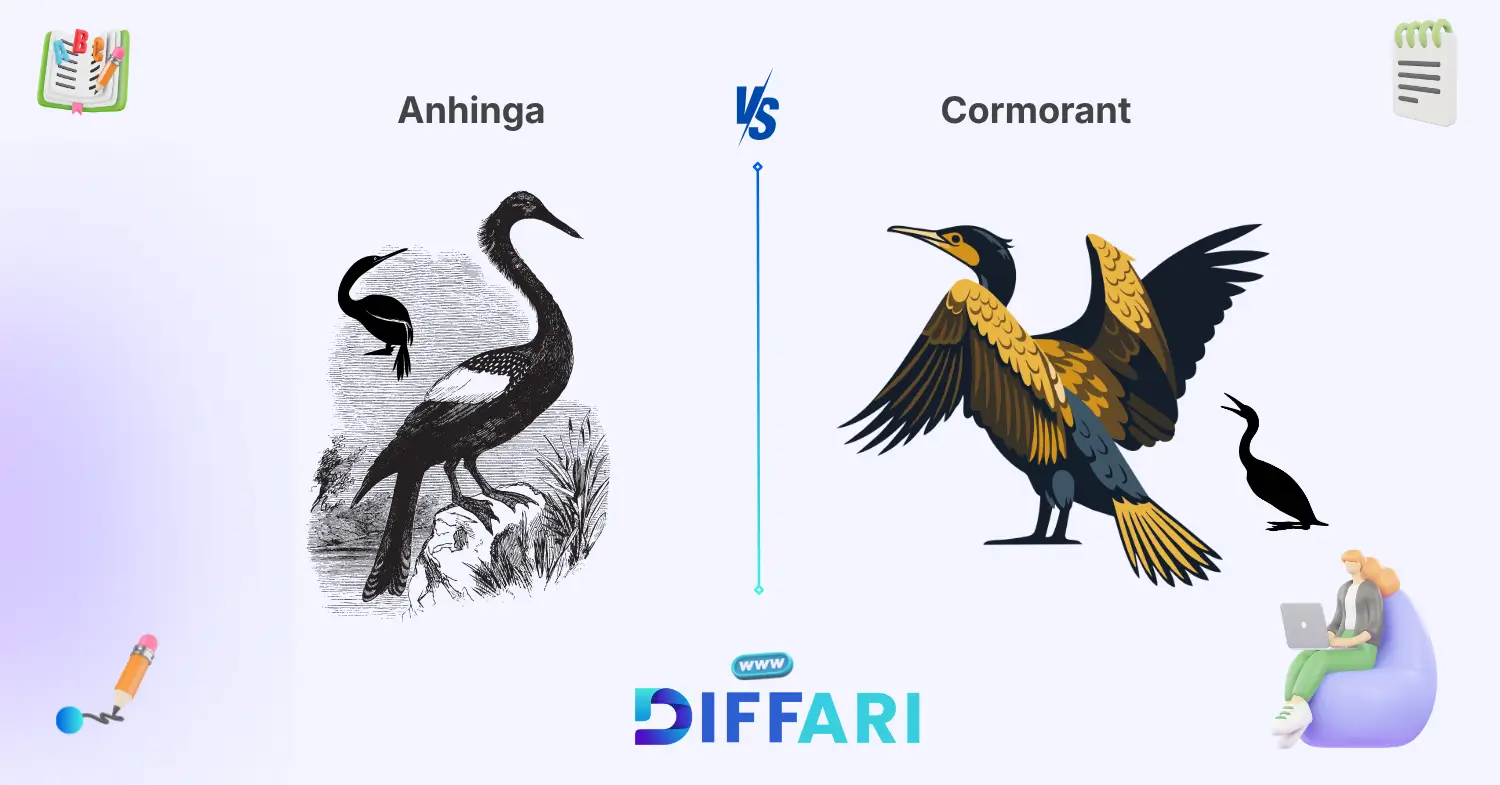

Difference between anhinga and cormorant is a common question for birdwatchers, students, and nature lovers. Imagine standing near a quiet lake and seeing a dark water bird drying its wings under the sun. You may wonder whether it is an anhinga or a cormorant because both birds look very similar.
The difference between anhinga and cormorant becomes easier to understand when we look at their body shape, hunting style, and habitat. Anhingas are often called snake birds because of their long necks, while cormorants appear stronger and heavier with hooked beaks.
Many learners search for the difference between anhinga and cormorant to improve their wildlife knowledge and English vocabulary. Understanding this difference helps in bird identification, biology studies, and environmental awareness.
In this guide, we will explore the difference between anhinga and cormorant in a simple ESL-friendly way so you can clearly recognize both birds in real life.
Key Difference Between the Two
The main difference between anhinga and cormorant is body structure and hunting behavior.
Anhinga has a long, thin neck and spears fish with its sharp straight beak. It swims with only its neck above water, which makes it look like a snake.
Cormorant has a thicker body and catches fish by diving and grabbing them with a hooked beak. It floats higher in water and looks heavier and stronger.
In simple terms, anhinga is slender and spear-hunting, while cormorant is strong and diving-hunting.
Why Is Their Difference Necessary to Know
Understanding the difference between anhinga and cormorant helps students improve scientific knowledge and observation skills. It supports biology learning and makes bird identification easier.
Researchers and wildlife experts need this distinction to document species correctly and protect ecosystems. Accurate identification helps in conservation and environmental research.
In society, learning about bird species increases awareness about biodiversity and nature protection. It also improves communication among birdwatchers and educators.
Now let’s learn how to pronounce both names correctly.
Pronunciation
Anhinga
US: /ænˈhɪŋɡə/
UK: /ænˈhɪŋɡə/
Cormorant
US: /ˈkɔːrmərənt/
UK: /ˈkɔːmərənt/
Correct pronunciation helps learners speak confidently in academic and wildlife discussions.
Core Definitions
Anhinga
Anhinga is a freshwater water bird known for its long neck and sharp beak. It hunts fish by spearing them underwater and often spreads its wings to dry in the sun. Its scientific name is Anhinga anhinga.
Example:
An anhinga sat on a tree branch drying its wings after fishing.
Cormorant
Cormorant is a diving water bird with a strong body and hooked beak. It catches fish by grabbing them underwater and lives in both freshwater and coastal environments. Its scientific group belongs to Phalacrocoracidae.
Example:
A cormorant dived into the river and caught a fish.
10 Clear Differences Between Anhinga and Cormorant
1. Body Shape
Anhinga has a slim and elegant body with a long neck.
Cormorant has a thicker and heavier body.
Example for Anhinga:
The anhinga looked thin and snake-like in water.
Example for Cormorant:
The cormorant looked strong and bulky near the river.
2. Neck Length
Anhinga has a long and narrow neck.
Cormorant has a shorter and thicker neck.
Example for Anhinga:
Anhinga stretched its long neck while hunting.
Example for Cormorant:
Cormorant kept its neck slightly curved.
3. Hunting Method
Anhinga spears fish with a straight beak.
Cormorant grabs fish with a hooked beak.
Example for Anhinga:
Anhinga pierced a fish underwater.
Example for Cormorant:
Cormorant grabbed fish quickly.
4. Swimming Style
Anhinga swims with only neck visible.
Cormorant floats higher in water.
Example for Anhinga:
Anhinga looked like a snake in the lake.
Example for Cormorant:
Cormorant floated like a duck.
5. Beak Shape
Anhinga has a straight beak.
Cormorant has a curved beak.
Example for Anhinga:
Straight beak helps anhinga spear fish.
Example for Cormorant:
Hooked beak helps cormorant hold fish.
6. Habitat
Anhinga lives mostly in freshwater wetlands.
Cormorant lives in freshwater and coastal areas.
Example for Anhinga:
Anhinga stayed in swamp areas.
Example for Cormorant:
Cormorant stayed near ocean.
7. Wing Drying
Anhinga spreads wings widely.
Cormorant spreads wings moderately.
Example for Anhinga:
Anhinga opened wings fully.
Example for Cormorant:
Cormorant dried wings calmly.
8. Flight Style
Anhinga glides smoothly.
Cormorant flaps more frequently.
Example for Anhinga:
Anhinga glided over water.
Example for Cormorant:
Cormorant flew steadily.
9. Appearance
Anhinga looks graceful and slender.
Cormorant looks strong and dark.
Example for Anhinga:
Anhinga looked elegant.
Example for Cormorant:
Cormorant looked powerful.
10. Geographic Distribution
Anhinga lives mainly in warm regions.
Cormorant lives worldwide.
Example for Anhinga:
Anhinga found in American wetlands.
Example for Cormorant:
Cormorant found globally.
Why Knowing the Difference Matters
Students improve scientific vocabulary and observation skills by learning the difference between anhinga and cormorant. This supports biology and environmental education.
Professionals like wildlife photographers and researchers rely on accurate identification to document species correctly and protect ecosystems.
Clear understanding also improves communication in academic and environmental discussions.
Real-world consequences of confusion
Incorrect identification may lead to wrong wildlife reports and inaccurate ecological research, which affects conservation efforts.
Why People Get Confused
Similar Appearance
Both birds are dark water birds with wing-drying behavior, which creates confusion.
Semantic Overlap
Both belong to aquatic bird groups.
Context-Based Usage
Photos and videos often show them in similar environments.
Informal Speech
People use both names interchangeably.
Connotation & Emotional Tone
Connotation = emotional meaning attached to a word.
Anhinga
Positive: graceful bird
Negative: snake-like appearance
Neutral: freshwater bird
Example: Anhinga looked elegant near the lake.
Cormorant
Positive: strong diver
Negative: aggressive fisher
Neutral: water bird
Example: Cormorant dived into the river.
Usage in Metaphors, Similes & Idioms
The anhinga moved like a snake in water.
The cormorant dived like a skilled hunter.
These comparisons help describe movement and behavior.
Comparison Table
| Feature | Anhinga | Cormorant |
|---|---|---|
| Meaning | Snake-like water bird | Diving water bird |
| Tone | Elegant | Strong |
| Usage | Freshwater wetlands | Global waters |
| Context | Bird identification | Marine and freshwater studies |
| Formality | Scientific | Scientific |
Which Is Better in What Situation
When to Use Anhinga
Use anhinga when describing snake-like freshwater birds in wetlands or lakes. It is common in wildlife and academic discussions.
When to Use Cormorant
Use cormorant when referring to diving water birds found in oceans, rivers, and lakes worldwide.
Situational Clarity
Choose based on neck length and beak shape.
Contextual Correctness
Correct usage improves scientific communication.
Literary or Cultural References
Birds of North America – National Geographic (2011)
Planet Earth – BBC Documentary (2006)
FAQs
Are anhinga and cormorant the same bird?
No, they are different species with different body shapes and hunting styles.
Why is anhinga called snake bird?
Because it swims with its neck above water like a snake.
Can cormorants live in freshwater?
Yes, many cormorants live in freshwater and coastal areas.
Do both birds dry their wings?
Yes, both spread wings to dry feathers.
Which bird is easier to identify?
Anhinga is easier due to long neck.
Conclusion
The difference between anhinga and cormorant mainly depends on body shape, hunting method, and habitat. Anhinga is slender with a long neck and spear-hunting style, while cormorant is strong with a hooked beak and diving behavior.
Understanding this difference improves bird identification and environmental knowledge. It also helps students and professionals communicate accurately in wildlife and academic discussions.
With practice and observation, identifying these water birds becomes easy and enjoyable.

Sajid Ali is an English language educator and content specialist with 7+ years of teaching experience. He holds master’s degrees in Information Technology and Education from the Virtual University of Pakistan and writes SEO-optimized, learner-friendly vocabulary content for diffari.com.