
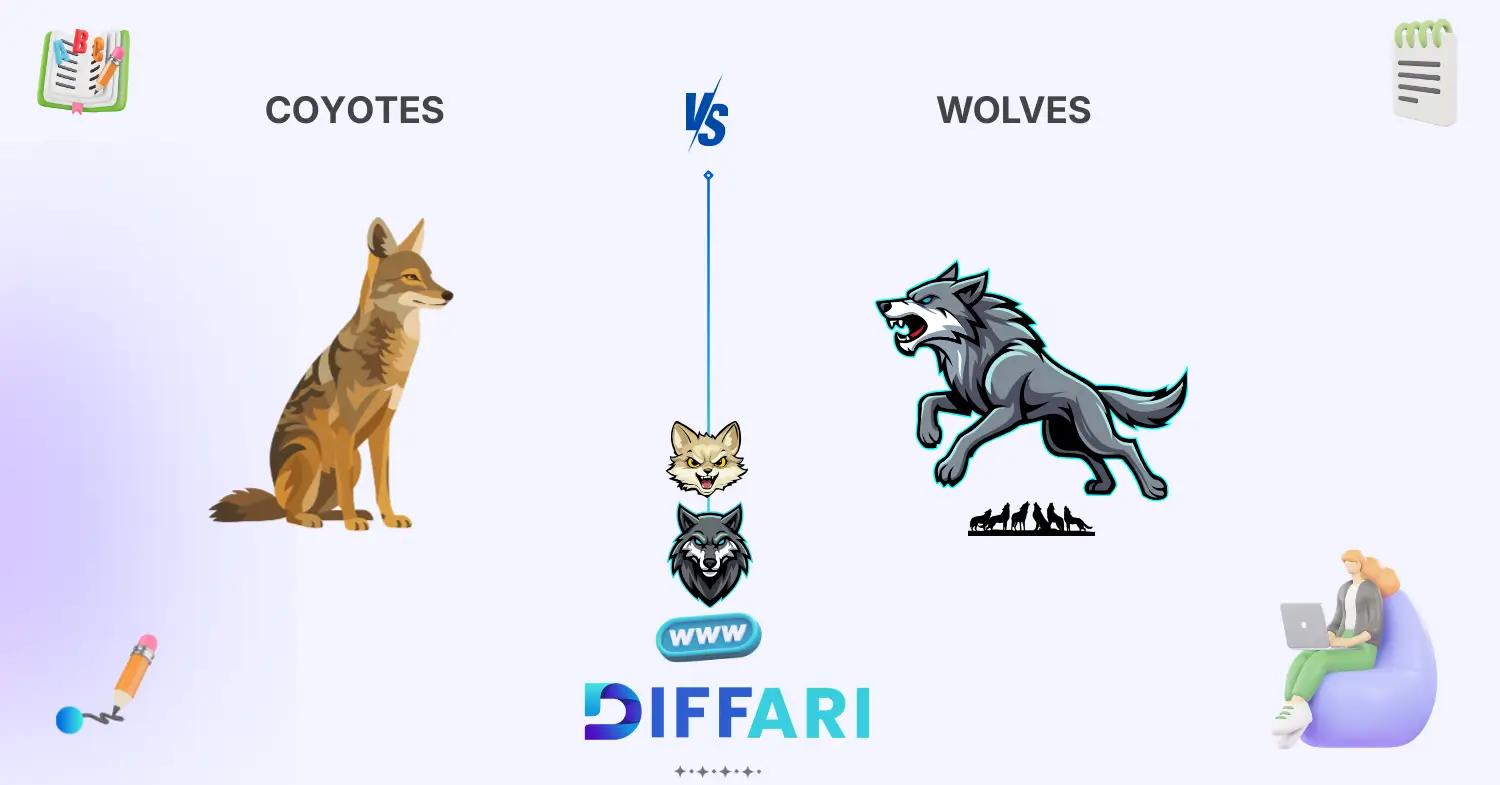

Difference between coyotes and wolves often becomes confusing when you hear a howl at night. You may wonder which animal made that sound.
Many people think coyotes and wolves are the same. In reality, they differ in size, behavior, and lifestyle.
The difference between coyotes and wolves is important for understanding wildlife and nature correctly.
Learning the difference between coyotes and wolves helps students, writers, and nature lovers describe animals clearly. Let’s explore this step by step.
🔑 Key Difference Between the Two
Wolves are larger, stronger animals that live and hunt in packs.
Coyotes are smaller, more adaptable animals that often live alone or in small groups.
In short: wolves = powerful pack hunters, coyotes = flexible survivors.
📘 Why Is Their Difference Necessary to Know
Understanding this difference helps students describe animals correctly in studies and exams.
Wildlife experts use this knowledge to study ecosystems and animal behavior.
In daily conversation, correct usage improves clarity and avoids confusion.
Now, let’s look at how to pronounce these words.
🔊 Pronunciation
Coyotes
US: /kaɪˈoʊ.tiːz/
UK: /kaɪˈəʊ.tiːz/
Wolves
US: /wʊlvz/
UK: /wʊlvz/
Now that pronunciation is clear, let’s define each animal.
📚 Core Definitions
Coyotes
Coyotes are medium-sized wild animals known for adaptability and survival skills. They belong to the dog family.
Example:
The coyote searched for food near the road.
Wolves
Wolves are large wild animals known for strength and teamwork. They live and hunt in organized packs.
Example:
The wolves hunted together as a group.
📊 10 Clear Differences Between Coyotes and Wolves
1. Size and Appearance
Wolves are much larger and heavier. Coyotes are smaller and slimmer.
Example for Coyotes:
The coyote looked lean and light.
Example for Wolves:
The wolf looked big and powerful.
2. Strength
Wolves are stronger and can hunt large animals. Coyotes are less powerful.
Example for Coyotes:
The coyote hunted small prey.
Example for Wolves:
The wolf attacked a large deer.
3. Social Structure
Wolves live in large packs. Coyotes often live alone or in pairs.
Example for Coyotes:
The coyote walked alone.
Example for Wolves:
The wolves moved together as a pack.
4. Intelligence Style
Coyotes rely on clever survival skills. Wolves depend on teamwork and strategy.
Example for Coyotes:
The coyote avoided danger smartly.
Example for Wolves:
The wolves planned their hunt together.
5. Habitat
Coyotes adapt to cities and deserts. Wolves prefer forests and wild areas.
Example for Coyotes:
Coyotes lived near urban areas.
Example for Wolves:
Wolves stayed deep in forests.
6. Diet
Coyotes eat small animals and scraps. Wolves hunt larger animals.
Example for Coyotes:
The coyote ate leftovers.
Example for Wolves:
The wolf hunted a large animal.
7. Sound and Communication
Coyotes make high-pitched howls. Wolves produce deep, long howls.
Example for Coyotes:
The coyote made a sharp call.
Example for Wolves:
The wolf howled deeply.
8. Behavior Toward Humans
Coyotes are more comfortable near humans. Wolves avoid human contact.
Example for Coyotes:
The coyote came close to houses.
Example for Wolves:
The wolf stayed far away.
9. Psychological Impact
Coyotes seem clever and tricky. Wolves appear powerful and majestic.
Example for Coyotes:
The coyote seemed sneaky.
Example for Wolves:
The wolf looked noble and strong.
10. Expression Style
Coyotes often represent survival. Wolves symbolize strength and unity.
Example for Coyotes:
He survived like a coyote.
Example for Wolves:
They worked like a wolf pack.
🎯 Why Knowing the Difference Matters
Students improve their learning by identifying animals correctly. It strengthens observation skills.
Professionals like researchers and writers use accurate terms for clarity and credibility.
In daily life, proper identification avoids confusion and builds confidence in communication.
Real‑world consequences of confusion
Calling a wolf a coyote may lead to misunderstanding, especially in wildlife discussions.
🧠 Why People Get Confused
Similar Appearance
Both animals look alike with similar fur color.
Semantic Overlap
People group them as “wild dogs.”
Context-Based Usage
They often live in overlapping regions.
Informal Speech
People use names loosely without accuracy.
🎭 Connotation & Emotional Tone
Connotation (the emotional meaning attached to a word)
Coyotes
Positive: Symbol of survival and adaptability.
Example: He survived like a coyote.
Negative: Seen as sneaky or tricky.
Example: The coyote acted slyly.
Neutral: Used in wildlife context.
Example: A coyote crossed the road.
Wolves
Positive: Symbol of strength and teamwork.
Example: The wolf showed leadership.
Negative: Sometimes linked to danger.
Example: The wolf seemed threatening.
Neutral: Common in nature discussion.
Example: A wolf howled at night.
🗣 Usage in Metaphors, Similes & Idioms
- “Lone wolf” means someone independent.
- “Cunning as a coyote” means clever survival.
Example:
He lived like a lone wolf but survived like a coyote.
📊 Comparison Table
| Feature | Coyotes | Wolves |
|---|---|---|
| Meaning | Medium-sized wild animal | Large wild predator |
| Tone | Clever, adaptable | Strong, powerful |
| Usage | Survival stories | Strength and teamwork |
| Context | Urban and wild | Mostly wild areas |
| Formality | Neutral | Neutral |
⚖️ Which Is Better in What Situation?
When to Use Coyotes
Use “coyotes” when referring to smaller, adaptable animals. It fits urban wildlife and survival contexts.
When to Use Wolves
Use “wolves” for larger, pack-based animals. It suits discussions about strength and teamwork.
Situational Clarity
Check size and behavior. Smaller and flexible means coyote. Larger and social means wolf.
Contextual Correctness
In storytelling, choose based on meaning. Coyotes show survival. Wolves show unity.
📖 Literary or Cultural References
- Book: White Fang (Adventure, Jack London, 1906)
- Movie: The Grey (USA, 2011) – wolves as survival threat
- Folklore: Native stories often feature coyotes as tricksters
❓ FAQs
1. Are coyotes and wolves the same species?
No, they are different species. Both belong to the dog family but have distinct traits. Wolves are larger and stronger. Coyotes are smaller and more adaptable. They behave differently in nature.
2. Which animal is more dangerous?
Wolves are generally more dangerous due to their size and strength. However, they avoid humans. Coyotes are less dangerous but may come closer to human areas. Both should be respected.
3. Can coyotes and wolves live together?
Yes, they can share habitats. However, wolves often dominate due to size. Coyotes may avoid wolves to stay safe. Their interaction depends on location.
4. Why do coyotes come near cities?
Coyotes adapt easily to human environments. They find food and shelter in cities. This makes them more visible to people. Wolves usually avoid such areas.
5. How can I identify them quickly?
Look at size first. Wolves are bigger. Listen to the sound. Wolves have deep howls, while coyotes sound sharper. These clues help quickly.
🏁 Conclusion
The difference between coyotes and wolves becomes clear when you observe size, behavior, and lifestyle. Each animal plays a unique role in nature.
Coyotes stand out for adaptability and clever survival. Wolves show strength and teamwork in their packs.
Understanding this difference improves your knowledge and communication. It also builds respect for wildlife.
Keep observing nature and practicing these differences. Over time, you will identify them easily and confidently 🐺

Sajid Ali is an English language educator and content specialist with 7+ years of teaching experience. He holds master’s degrees in Information Technology and Education from the Virtual University of Pakistan and writes SEO-optimized, learner-friendly vocabulary content for diffari.com.